You wake up, you’re hungry, and you want something that actually fills you up — but you’re also trying to eat light. Sound familiar?
Most people think a low calorie Indian breakfast means eating less. Less roti, less rice, less flavor — basically less of everything you love. But that’s not how it works. In fact, eating the wrong kind of “light” breakfast is exactly why so many people end up starving by 10 AM and raiding the office snack drawer by 11.
The truth is, the best breakfast for weight loss in India isn’t about eating less. It’s about eating smarter. And the good news? Some of the most filling, most satisfying breakfasts in Indian cuisine naturally come in under 300 calories — you just need to know which ones they are and how to make them right.
In this blog, we’re going to walk you through 5 low calorie Indian breakfast options that are high in protein, fiber, and flavor — so you stay full, energized, and on track till lunch without feeling like you’re on a diet.
Why Breakfast Matters So Much for Weight Loss
Before we get into the list, let’s clear something up. Skipping breakfast to “save calories” is one of the most common mistakes people make when trying to lose weight.
When you skip breakfast, your blood sugar drops, your hunger hormone ghrelin spikes, and by mid-morning you’re either overeating or reaching for something high in sugar just to function. This throws off your entire day’s eating pattern.
A well-balanced, low calorie breakfast does the opposite. It stabilizes your blood sugar, keeps your metabolism active, and sends signals to your brain that you’re nourished — which means fewer cravings and better food choices for the rest of the day.
If you’re working toward sustainable weight loss, breakfast is not optional. It’s the foundation.
What Makes a Breakfast “Filling” Even at Under 300 Calories?
Not all 300-calorie breakfasts are created equal. A plate of white bread toast with jam might come in under 300 calories but leave you hungry in 45 minutes. On the other hand, a bowl of moong dal chilla with chutney at around 220 calories can keep you going for 4 hours.
The difference comes down to three things:
Protein slows digestion and keeps you feeling full longer. It also helps preserve muscle while you lose fat.
Fiber adds bulk to your meal, slows the release of glucose into your blood, and feeds your gut bacteria — which is great for digestion and long-term gut health.
Low glycemic index (GI) foods release energy slowly, preventing the sudden spikes and crashes that trigger hunger.
Any low calorie breakfast idea for India that ticks these three boxes is a winner. Let’s get into them.
5 Low Calorie Indian Breakfasts Under 300 Calories
1. Moong Dal Chilla (2 pieces) — Approx. 180–200 Calories
If there’s one Indian breakfast for weight loss that every dietitian recommends, it’s moong dal chilla. And for good reason.
Made from soaked and blended yellow moong dal, these savory pancakes are naturally high in plant-based protein and fiber, low in fat, and incredibly filling. Two medium chillas made without oil (or with just a light spray) come in well under 200 calories.
Why it keeps you full: Moong dal is rich in protein — around 6–7g per serving — plus soluble fiber that slows digestion and keeps hunger at bay.
How to make it smarter:
- Add finely grated veggies like carrot, spinach, or onion into the batter
- Use a non-stick pan with a light oil spray instead of pouring oil
- Pair with mint-coriander chutney (which adds virtually zero calories)
Calorie Breakdown:
| Item | Calories |
| 2 moong dal chillas (non-stick, light spray) | ~180 kcal |
| 2 tbsp mint chutney | ~15 kcal |
| Total | ~195 kcal |
This is one of the best Indian breakfast recipes for weight loss that even people withdiabetes and PCOS can enjoy, since moong dal has a low glycemic index.
2. Vegetable Oats Upma — Approx. 220–250 Calories
Oats upma is what happens when you take the comfort of traditional upma and make it even better for your health. Using oats instead of rava (semolina) dramatically increases the fiber content and lowers the glycemic index — making it one of the smartest low calorie breakfast ideas for India.
Why it keeps you full: Oats are packed with beta-glucan, a type of soluble fiber that forms a gel in your stomach and slows digestion. This translates to longer satiety and stable blood sugar levels.
How to make it smarter:
- Use rolled oats, not instant oats (higher fiber content)
- Load it with vegetables — carrots, beans, peas, capsicum
- Temper with just 1 tsp of oil, mustard seeds, curry leaves, and green chili
- Add a handful of peanuts for extra protein (just watch the portion)
Calorie Breakdown:
| Item | Calories |
| ½ cup rolled oats | ~150 kcal |
| Mixed vegetables (½ cup) | ~30 kcal |
| 1 tsp oil + seasoning | ~40 kcal |
| Total | ~220 kcal |
This healthy Indian breakfast under 300 calories is also a great option if you’re managingthyroid issues or hypertension, as oats support both heart health and metabolic function.
3. Sprout Chaat (Boiled Mixed Sprouts) — Approx. 150–180 Calories
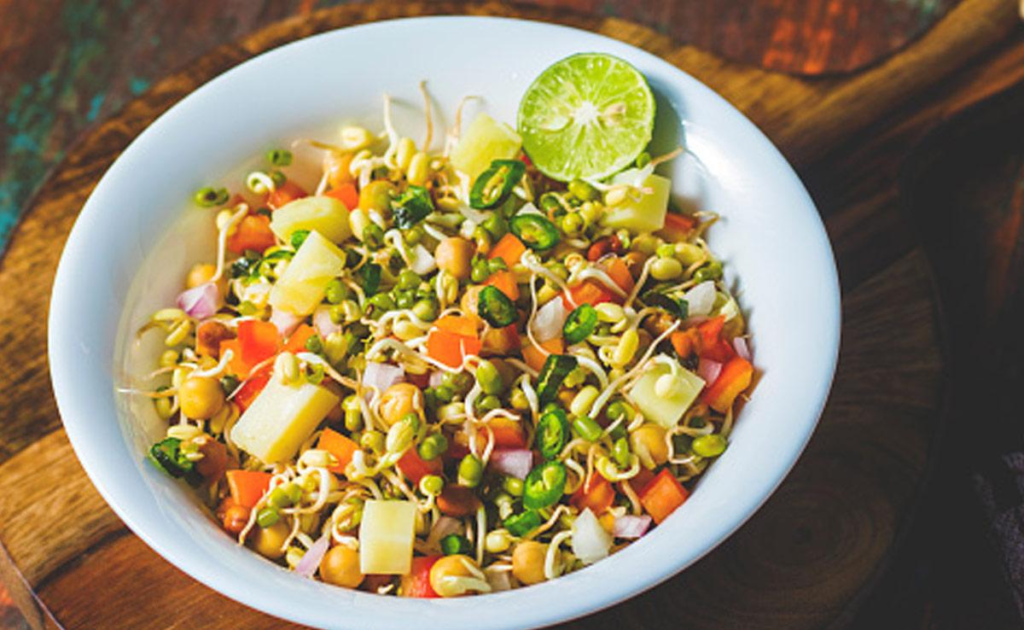
Sprouts are one of the most underrated low calorie Indian breakfasts out there. A bowl of mixed boiled sprouts — moong, chana, or matki — with some lemon, black salt, chopped onion, tomato, and coriander is a complete meal in under 180 calories.
And it’s not just low in calories — it’s high in protein, vitamins, and antioxidants. Sprouting actually increases the nutritional value of legumes, making nutrients more bioavailable.
Why it keeps you full: Sprouts are high in both protein and fiber, and the combination of the two makes this one of the most satiating low calorie breakfast options you’ll find.
How to make it smarter:
- Boil your sprouts lightly — raw sprouts can sometimes be hard to digest
- Add cucumber and tomato for volume and crunch
- A squeeze of lemon and a pinch of chaat masala adds flavor without calories
- Avoid adding fried toppings or sev, which quickly push up the calorie count
Calorie Breakdown:
| Item | Calories |
| 1 cup mixed boiled sprouts | ~120 kcal |
| Chopped onion, tomato, cucumber | ~30 kcal |
| Lemon, black salt, chaat masala | ~5 kcal |
| Total | ~155 kcal |
This is one of the best breakfasts for weight loss in India if you’re also dealing with hormonal imbalance or PCOS, as legumes support hormone regulation and insulin sensitivity.
4. Besan Cheela with Low-Fat Curd — Approx. 230–260 Calories
Besan cheela (chickpea flour pancakes) is a classic Indian breakfast recipe for weight loss that’s been around for generations — and for good reason. Made from chickpea flour, it’s naturally gluten-free, high in protein, and rich in fiber.
Pair it with a small bowl of low-fat curd and you’ve added probiotics to the mix, which is excellent for your gut and overall digestion.
Why it keeps you full: Chickpea flour has a low glycemic index and high protein content — around 8g per 2 cheelas. Combined with the protein and probiotics from curd, this breakfast holds you for hours.
How to make it smarter:
- Keep the batter slightly thick for better texture without needing extra oil
- Add finely chopped spinach, grated zucchini, or onion to the batter
- Use just ½ tsp oil per cheela on a non-stick pan
- Avoid adding too much salt — it can make you feel bloated
Calorie Breakdown:
| Item | Calories |
| 2 besan cheelas (light oil) | ~190 kcal |
| 100g low-fat curd | ~60 kcal |
| Total | ~250 kcal |
This is particularly good for people focused on skin and hair health, as chickpea flour is rich in zinc and folate — key nutrients for healthy skin and hair growth.
5. Poha with Peas and Lemon — Approx. 250–280 Calories
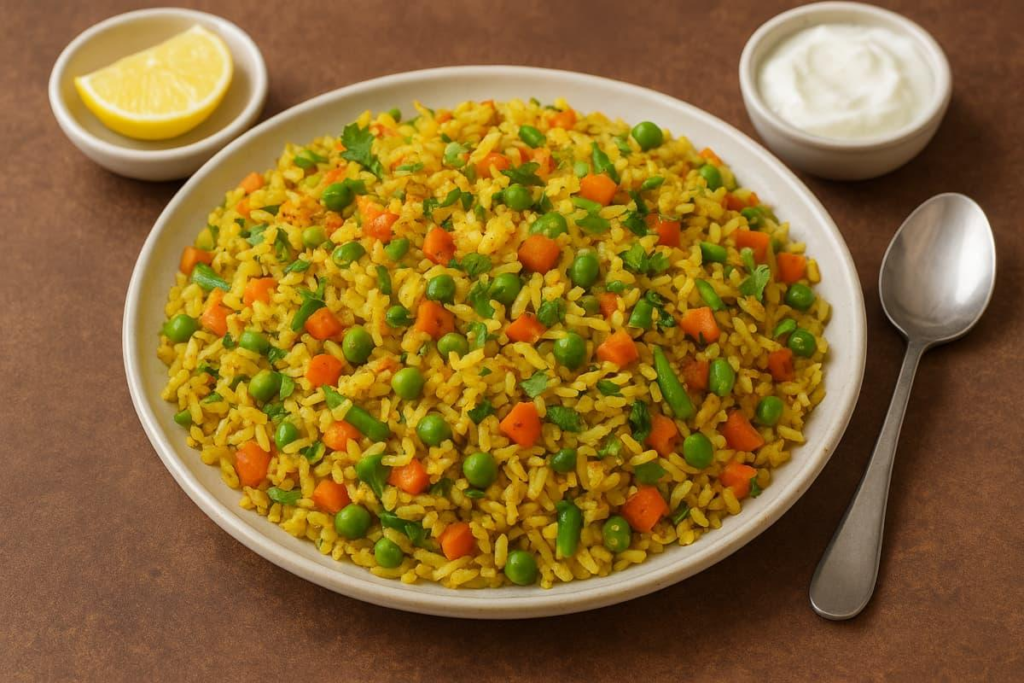
Poha often gets a bad reputation in weight loss circles because people assume it’s just “flat rice.” But made the right way, poha is one of the best low calorie Indian breakfasts you can have. It’s light, easy to digest, naturally low in fat, and when made with vegetables and peas, it becomes a well-rounded meal.
The key is in the preparation. Traditional poha can go up to 400+ calories if made with too much oil or topped with sev. But a clean version with minimal oil and lots of vegetables comes in comfortably under 280 calories.
Why it keeps you full: Poha is a good source of carbohydrates for sustained energy, and when paired with peas (which bring protein and fiber), it creates a more balanced meal that keeps you full longer.
How to make it smarter:
- Rinse your poha and drain well — this also lowers the carb load slightly
- Use just 1 tsp of oil for tempering
- Add ½ cup of green peas, which adds protein and fiber without adding many calories
- Finish with fresh lemon juice and coriander — no sev, no fried additions
- You can add roasted peanuts (about 10–12) for a protein boost
Calorie Breakdown:
| Item | Calories |
| ¾ cup poha (rinsed and cooked) | ~180 kcal |
| ½ cup peas | ~40 kcal |
| 1 tsp oil + seasoning + peanuts | ~55 kcal |
| Total | ~275 kcal |
This is a great healthy Indian breakfast under 300 calories for people with gut health concerns, as poha is gentle on the stomach and easy to digest.
Quick Comparison Table
| Breakfast | Approx. Calories | Protein | Fiber | Best For |
| Moong Dal Chilla (2) | ~195 kcal | High | High | PCOS, Diabetes, Weight Loss |
| Vegetable Oats Upma | ~220 kcal | Medium | Very High | Thyroid, Hypertension, Weight Loss |
| Sprout Chaat | ~155 kcal | High | High | PCOS, Hormonal Balance, Weight Loss |
| Besan Cheela + Curd | ~250 kcal | High | Medium | Skin, Hair, Weight Loss |
| Poha with Peas | ~275 kcal | Medium | Medium | Gut Health, Weight Loss |
Common Mistakes That Turn a Healthy Breakfast Into a Calorie Bomb
Even the healthiest Indian breakfast recipe for weight loss can go wrong if you’re not careful. Here are the most common mistakes to avoid:
Using too much oil. A single extra tablespoon of oil adds ~120 calories. Always use a non-stick pan and stick to 1 tsp or less per serving.
Adding packaged chutneys or sauces. Most store-bought chutneys and sauces are loaded with sugar and preservatives. Make chutney fresh at home — it’s quick, easy, and nearly calorie-free.
Drinking your calories. A glass of mango juice or sweetened chai alongside your breakfast can add 100–200 calories without filling you up. Opt for plain chai with less sugar or black coffee instead.
Skipping protein. If your breakfast is mostly carbs with no protein, you’ll be hungry much sooner. Always try to include a protein source — dal, sprouts, curd, or besan.
Eating too fast. This one’s underrated. Eating quickly means your satiety signals don’t have time to kick in, and you end up eating more than you need. Slow down, chew well, and actually enjoy your food.
What to Drink With Your Low Calorie Breakfast
What you drink with your breakfast matters just as much as what you eat. Here are some zero-to-low calorie options that complement your Indian breakfast for weight loss:
- Warm water with lemon — great for digestion and hydration
- Jeera (cumin) water — supports digestion and can help reduce bloating
- Plain green tea — mild metabolism boost with zero calories
- Black coffee (unsweetened) — helps with focus and metabolism
- Buttermilk (chaas, no sugar) — adds probiotics and keeps you hydrated
Avoid fruit juices in the morning — even fresh ones. The fiber is removed during juicing, and you end up with a fast-absorbing sugar hit that spikes blood glucose and triggers hunger sooner.
Does Breakfast Timing Matter?
Yes — and this is something most people overlook. Eating breakfast within 1–2 hours of waking up is generally better for your metabolism and blood sugar regulation. Waiting too long can lead to blood sugar dips, energy crashes, and overeating later.
If you’re practicing intermittent fasting, that’s a different story — and worth discussing with a dietitian based on your specific health goals and condition. For most people though, an early, well-balanced breakfast sets the best foundation for the day.
Special Conditions to Keep in Mind
If you have a specific health condition, your breakfast choices may need to be slightly adjusted:
PCOS: Focus on low GI options like moong dal chilla and sprouts. Avoid refined carbs.
Diabetes: Portion control is key. Oats upma and moong dal chilla are great choices. Avoid even “healthy” carbs in large portions. Explore diabetes nutrition guidance here.
Thyroid: Oats, eggs (if non-vegetarian), and sprouts are excellent. Avoid raw cruciferous vegetables at breakfast if you have hypothyroidism.
Gut issues: Stick to lighter, easily digestible options like poha and oats upma. Fermented foods like curd with besan cheela are great for gut bacteria.
A Sample Morning Routine Built Around Low Calorie Breakfasts
Here’s what a smart morning could look like if you’re working on weight loss:
7:00 AM — Wake up, have a glass of warm lemon water or jeera water
7:30 AM — Light walk or 10 minutes of stretching
8:00–8:30 AM — One of the 5 breakfasts listed above
10:30–11:00 AM — A small snack if needed (handful of roasted chana, a fruit, or buttermilk)
1:00–1:30 PM — Lunch
This simple routine, when followed consistently, can make a significant difference in how your body manages hunger, energy, and weight over time.
The Bottom Line
A low calorie Indian breakfast doesn’t have to be boring, small, or unsatisfying. The 5 options we’ve shared — moong dal chilla, oats upma, sprout chaat, besan cheela with curd, and clean poha — are proof that you can eat under 300 calories and still feel genuinely full till lunch.
The secret is choosing foods that are high in protein and fiber, cooking with minimal oil, and avoiding the common add-ons that quietly push up the calorie count.
Start with just one swap this week. Replace your usual breakfast with one of these options and see how different you feel by mid-morning. Chances are, you’ll be reaching for your lunch — not a snack.
And if you want a plan that’s tailored specifically to your body, your health goals, and your lifestyle — we’re here to help. At The Health Studio, Dt. Richa Doshi creates personalized meal plans for weight loss, PCOS, diabetes, thyroid, and more — without starving you or taking away the foods you love.
Book your consultation today →
Frequently Asked Questions
Q: Is poha good for weight loss?
Yes, when made with minimal oil and loaded with vegetables, poha is a great low calorie Indian breakfast. Avoid adding sev or too much oil and keep portions in check.
Q: Which Indian breakfast has the highest protein?
Moong dal chilla and besan cheela are among the highest protein Indian breakfasts under 300 calories. Sprout chaat is also excellent for plant-based protein.
Q: Can I eat these breakfasts if I have diabetes?
Most of these options are diabetic-friendly, especially moong dal chilla, oats upma, and sprout chaat — all of which have a low glycemic index. However, always consult your dietitian for personalized guidance.
Q: How do I keep my breakfast under 300 calories?
Use a non-stick pan, limit oil to 1 tsp per serving, avoid packaged sauces or chutneys, skip fried toppings, and focus on whole ingredients.
Q: Is it okay to skip breakfast for weight loss?
Skipping breakfast can actually work against you by spiking hunger hormones and leading to overeating later in the day. A smart, low calorie breakfast is a much better strategy for sustainable weight loss.
Looking for a personalized Indian diet plan for weight loss? Connect with Dt. Richa Doshi at The Health Studio— Mumbai’s trusted clinical dietitian with 13+ years of experience and 10,000+ clients guided.