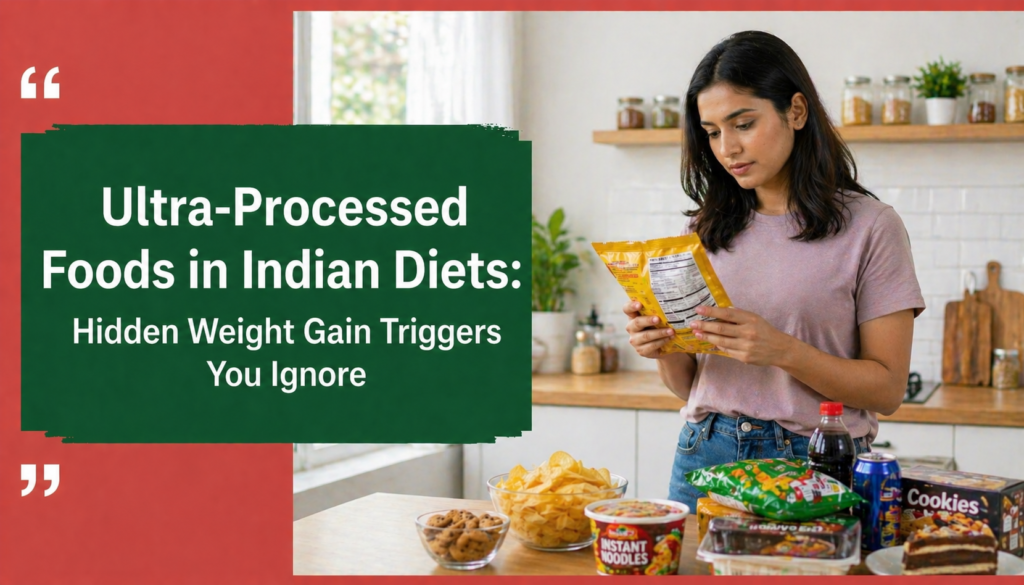
In today’s fast-paced lifestyle, convenience often takes priority over nutrition. From packaged snacks to instant meals, ultra-processed foods have quietly become a major part of Indian diets.
At Dietician Richa, one of the most common concerns seen among clients is unexplained weight gain—even when they believe they are eating “less” or “healthy.”
The real culprit? Hidden ultra-processed foods.
In this blog, we’ll uncover how these foods impact your body and how you can make smarter choices to support healthy weight loss and better digestion.
What Are Ultra-Processed Foods?
Ultra-processed foods are items that go through multiple levels of processing and contain ingredients not typically used in home cooking.
Examples include:
- Packaged chips and namkeen
- Instant noodles and ready-to-eat meals
- Sugary breakfast cereals
- Flavored yogurts and drinks
- Frozen snacks and bakery items
Unlike whole foods, these products are often loaded with:
- Added sugar
- Unhealthy fats
- Artificial preservatives
- Excess sodium
These ingredients make them highly addictive and easy to overconsume, often leading to hidden weight gain and poor digestion. This is a common concern highlighted by many experts, including a dietician in Mumbai, where fast-paced lifestyles have increased dependence on processed foods.
Why Ultra-Processed Foods Lead to Weight Gain
Many people assume weight gain is only about calories. However, ultra-processed foods affect your body in deeper ways.
1. They Disrupt Hunger Hormones
Ultra-processed foods interfere with hormones that control hunger and fullness.
This leads to:
- Constant cravings
- Overeating
- Late-night snacking
This is similar to patterns discussed in evening snacking mistakes that stop weight loss, where poor food choices lead to unnecessary calorie intake.
2. High Calories, Low Nutrition
These foods are calorie-dense but lack essential nutrients like fiber, vitamins, and minerals.
As a result:
- You feel hungry again quickly
- Your body lacks proper nourishment
Following a balanced plate approach for daily meals can help ensure your body gets the nutrients it needs.
3. Poor Gut Health
Ultra-processed foods negatively impact your gut bacteria, leading to:
- Bloating
- Indigestion
- Slower metabolism
This connects directly with insights from a gut health diet plan for improved digestion, where reducing processed foods is key to restoring gut balance.
4. Increased Fat Storage
These foods spike blood sugar levels rapidly, leading to fat storage—especially around the belly.
Over time, this increases the risk of:
- Obesity
- Insulin resistance
- Hormonal imbalance
5. Addictive Eating Patterns
Ultra-processed foods are designed to be hyper-palatable, making it hard to stop eating them.
This creates a cycle:
Craving → overeating → guilt → repeat
Common Ultra-Processed Foods in Indian Diets
You might be consuming these daily without realizing it:
- Packaged biscuits and cookies
- Instant poha, upma, or noodles
- Ready-made gravies and sauces
- Flavored chips and snacks
- Sugary beverages and packaged juices
Even foods marketed as “healthy” can be misleading.
Hidden Signs You’re Eating Too Many Processed Foods
You may not notice it immediately, but your body gives signals:
- Constant fatigue
- Frequent cravings
- Bloating or acidity
- Difficulty losing weight
- Low energy levels
If you relate to these, it’s time to rethink your diet.
How to Reduce Ultra-Processed Foods (Without Extreme Dieting)
You don’t need to eliminate everything overnight. Small, practical changes work best.
1. Choose Whole Foods More Often
Replace packaged snacks with:
- Fruits
- Nuts
- Homemade snacks
This aligns with strategies shared in healthy snack ideas for busy lifestyles, which focus on convenience without compromising nutrition.
2. Read Food Labels Carefully
Look for:
- Long ingredient lists
- Added sugars
- Artificial preservatives
If you can’t pronounce most ingredients, it’s likely ultra-processed.
3. Plan Your Meals
Unplanned eating often leads to unhealthy choices.
Simple meal planning—like in a daily diet plan for working professionals—can help you avoid processed foods.
4. Cook More at Home
Home-cooked meals give you control over ingredients.
Even simple meals like dal, roti, sabzi can be highly nutritious when prepared correctly.
5. Focus on Gut Health
Reducing processed foods improves gut bacteria, digestion, and metabolism.
Adding fiber-rich foods and probiotics can support long-term health.
6. Avoid “Healthy” Packaged Traps
Many products labeled as:
- Low-fat
- Sugar-free
- Diet-friendly
…are still highly processed.
Always check the ingredient list instead of trusting marketing claims.
Role of a Nutrition Expert
Understanding what to eat can be confusing, especially with so many options available.
At Dietician Richa, the focus is on:
- Personalized diet plans
- Sustainable eating habits
- Real-life practical solutions
Along with weight management, you can also benefit from tips from a nutritionist for weight gain naturally, especially if your goal is to build strength and improve overall health in a balanced way.
Instead of eliminating foods completely, the goal is to create a practical and sustainable approach that works for your lifestyle and long-term well-being.
Frequently Asked Questions (FAQs)
1. Are all processed foods unhealthy?
No. Minimally processed foods like frozen vegetables or curd are fine. The problem lies with ultra-processed foods high in additives and sugar.
2. Can cutting processed foods help with weight loss?
Yes. Reducing ultra-processed foods can improve metabolism, reduce cravings, and support healthy weight loss.
3. What are the best alternatives to processed snacks?
Fruits, nuts, homemade snacks, and simple Indian meals are excellent alternatives.
4. How do ultra-processed foods affect gut health?
They disrupt gut bacteria, leading to bloating, poor digestion, and reduced nutrient absorption.
Final Thoughts
Ultra-processed foods may seem convenient, but they silently impact your health, weight, and digestion.
The key is not perfection—but awareness.
Small changes like:
- Choosing whole foods
- Reducing packaged items
- Following structured eating habits
…can make a significant difference over time.
Get Expert Guidance for Your Nutrition
Struggling with weight gain, cravings, or poor eating habits despite trying different diets?
Get a personalized nutrition plan from Dietician Richa designed around your lifestyle, preferences, and health goals.
Start your journey toward better health, improved digestion, and sustainable weight loss today.