Every few years, a new breakfast trend takes over — overnight oats, avocado toast, green smoothies, acai bowls. Each one gets its moment on Instagram before quietly disappearing from most Indian kitchens.
Meanwhile, poha has been sitting on our breakfast tables for generations. Humble. Underrated. Overlooked in most weight loss conversations.
And honestly? That’s a shame. Because poha — made right — is one of the most intelligent breakfast choices you can make if weight loss is your goal.
Not because it’s a miracle food. Not because of any one nutrient. But because of what it does as a complete meal when you put it together properly.
Let’s get into the details — the real ones, not the Instagram version.
First, What Exactly Is Poha?
Poha is flattened rice — raw rice that has been parboiled, flattened into thin flakes, and dried. That parboiling process is important: it partially pre-cooks the starch inside the rice grain before it’s pressed flat. This changes the way your body digests it compared to regular cooked white rice.
It’s light. It’s quick to prepare. It soaks up flavor beautifully. And it has been a breakfast staple across Maharashtra, Madhya Pradesh, Gujarat, and much of central India forever.
The question isn’t whether poha is “good.” The question is: why is it good for weight loss specifically, and how do you make it work for you?
Poha Nutrition Facts — What’s Actually in Your Bowl
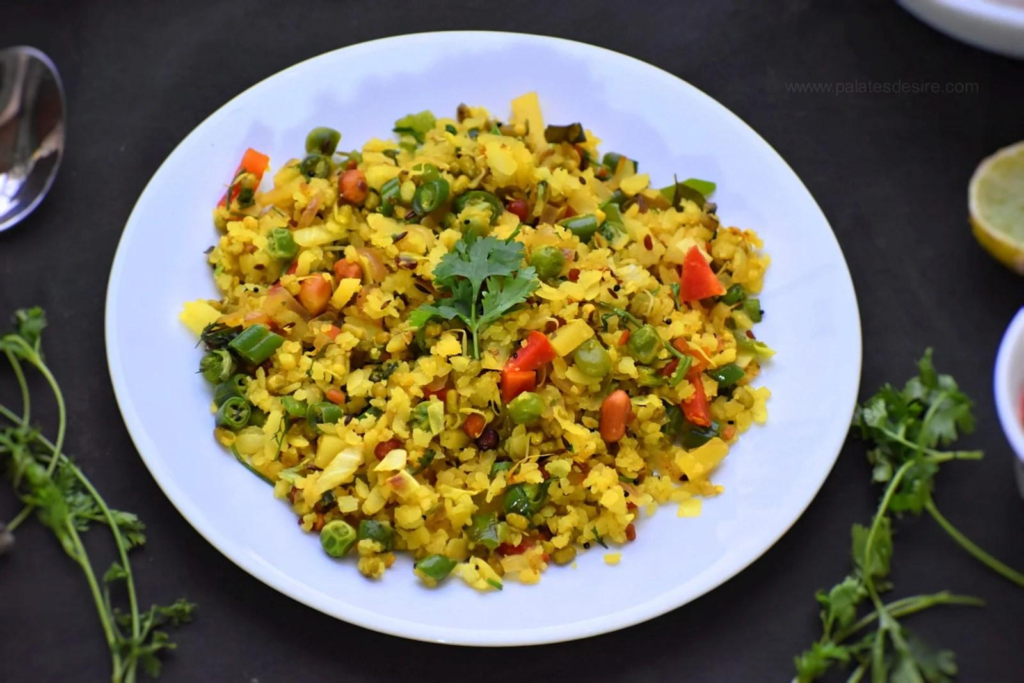
Before we talk about weight loss benefits, let’s look at what poha nutrition facts actually tell us.
Per 100g of plain cooked poha (no oil, no add-ons):
| Nutrient | Amount |
| Calories | 110–130 kcal |
| Carbohydrates | 25–28g |
| Protein | 2–3g |
| Fat | 0.5–1g |
| Dietary Fiber | 1.5–2.5g |
| Iron | 2–3mg (significant) |
| B Vitamins | Present (B1, B2, B3) |
| Glycemic Index (plain) | ~70 |
| Glycemic Index (with peanuts + lemon + veggies) | ~55–60 |
That last row is the one most people miss — and it’s the one that matters most.
Plain poha has a moderate-to-high glycemic index. But nobody eats plain poha. The moment you add peanuts (healthy fat), vegetables (fiber), and a squeeze of lemon (acidity slows starch digestion), the effective glycemic response of the entire meal drops significantly. This means slower sugar release, steadier energy, and longer satiety — exactly what you want from a weight loss breakfast.
Poha Calories — The Number That Confuses Everyone
“How many calories does poha have?”
This is one of the most Googled questions about this dish — and the answer is more nuanced than most websites admit.
Here’s the honest breakdown:
- 100g of dry poha flakes = approximately 350–370 kcal
- 100g of plain cooked poha (after soaking and cooking, no oil) = approximately 110–130 kcal
- One standard home-cooked bowl of vegetable poha (150–180g cooked, 1 tsp oil, peanuts, veggies) = approximately 180–220 kcal
- A generous street-style plate (250–300g, extra oil, potatoes, full peanut handful) = approximately 350–420 kcal
The calorie difference between a mindfully made home bowl and a street-food-sized plate is nearly double. This is where most people go wrong — not the food itself, but the portion and preparation.
For poha for weight loss, the goal is a 150–180g cooked serving with 1 tsp oil, plenty of vegetables, and peanuts in moderate quantity. That gives you a satisfying, nutritious breakfast for under 220 calories. For a weight loss breakfast, that’s genuinely impressive.
Is Poha Good for Weight Loss? Here’s the Real Answer
Yes — but with important context.
Poha supports weight loss for several specific reasons:
It’s high in volume, lower in calories.
Poha flakes swell and expand when soaked. A small amount of dry poha becomes a large, visually filling bowl once cooked. This tricks your brain into feeling like you’ve eaten more than you have — which is a legitimate, science-backed approach to managing hunger without cutting calories drastically.
It digests easily without making you sluggish.
Heavy, oily breakfasts leave you feeling slow and tired by 10 AM. Poha is light on the stomach. You feel fed, not stuffed. That distinction matters a lot for energy levels and productivity — and for not craving a mid-morning snack an hour later.
It’s a good source of iron.
Many Indians, especially women, are iron-deficient. Low iron = low energy = less motivation to be active. Poha, especially when eaten with a squeeze of lemon (vitamin C boosts iron absorption), is one of the better dietary sources of iron available in an everyday breakfast. More energy means more movement, which supports weight loss.
It keeps you satisfied when built right.
On its own, poha is primarily a carbohydrate. But paired with protein (peanuts, curd, sprouts, paneer) and fiber (peas, carrots, coriander, onion), it becomes a genuinely balanced meal that holds hunger at bay for 3–4 hours.
The caveat: poha alone, without these additions, will not keep you full for long. This is the most common mistake — eating plain poha with just onion and mustard seeds and wondering why you’re hungry by 10 AM.
How to Make Poha Actually Work for Weight Loss
The version of poha that supports weight loss looks quite different from the version that doesn’t.
The non-negotiables for weight loss-friendly poha:
1. Add a protein source — every single time
Poha’s biggest nutritional weakness is its low protein content (2–3g per 100g). Protein is what keeps you full and prevents muscle loss during weight loss. Fix this by adding:
- 2 tablespoons of roasted peanuts (adds ~5–6g protein)
- 50g crumbled paneer stirred in at the end (adds ~9g protein)
- A small handful of moong sprouts mixed in (adds ~4g protein)
- A boiled egg on the side (adds 6g protein)
- 1 small bowl of curd on the side (adds 5–6g protein)
With any of these additions, your poha breakfast goes from a 2–3g protein meal to a 10–15g protein meal. That’s a completely different hunger response.
2. Load it with vegetables
Peas, carrots, capsicum, corn, tomatoes, spinach — add whatever is in season. Vegetables increase the fiber content, slow down digestion, add micronutrients, and make the dish more filling without meaningfully adding calories. A vegetable-heavy bowl of poha is always a better weight loss choice than a plain one.
3. Use 1 teaspoon of oil — not more
The tempering (mustard seeds, curry leaves, green chili) needs only 1 tsp of oil to work perfectly. Extra oil is the most common way people accidentally double the calories of an otherwise healthy bowl. One teaspoon. That’s it.
4. Always squeeze lemon on top
This isn’t just about taste. Lemon juice (acidity) slows down starch digestion, which lowers the glycemic response of the meal. It also significantly improves iron absorption from the poha. Two benefits, one squeeze.
5. Skip the potato
Aloo poha is delicious. It’s also higher in starchy carbohydrates and significantly more calorie-dense than vegetable poha. If weight loss is the current goal, save the potato version for the weekend or reduce the quantity.
A Healthy Poha Recipe for Weight Loss
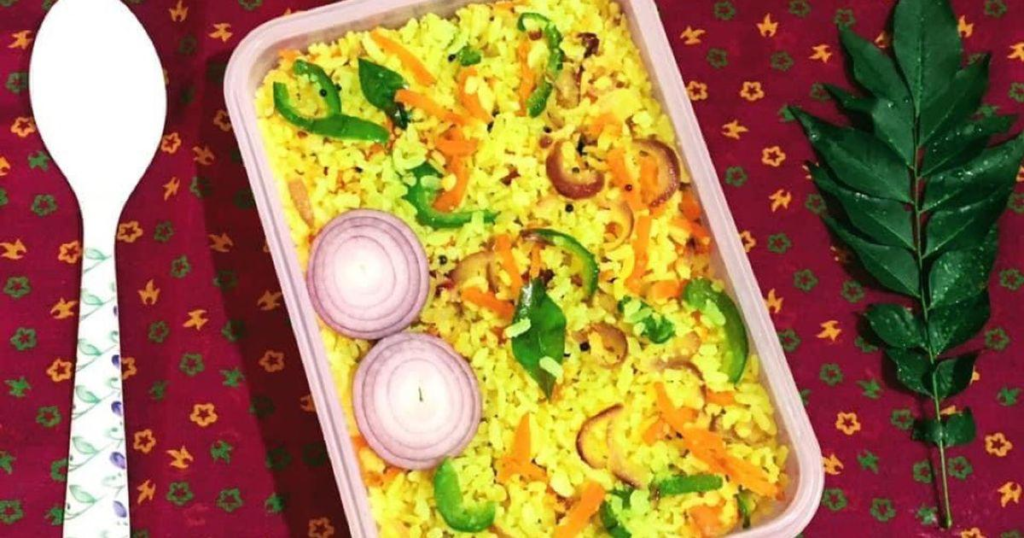
Here’s a simple, practical healthy poha recipe for weight loss that you can make in under 15 minutes:
Ingredients (1 serving):
- 60g dry poha flakes (thick variety preferred)
- 1 tsp oil
- ½ tsp mustard seeds
- 8–10 curry leaves
- 1 small onion, finely chopped
- 1 green chili, slit
- ¼ tsp turmeric
- ¼ cup peas (frozen or fresh)
- ¼ cup grated carrot
- 2 tbsp roasted peanuts
- Salt to taste
- Juice of half a lemon
- Fresh coriander to finish
Optional protein add-ons (pick one):
- 50g crumbled paneer stirred in at the end
- A small bowl of low-fat curd on the side
- A boiled egg alongside
Method:
Rinse the dry poha flakes in water, drain immediately, and set aside for 5 minutes to soften. Heat oil in a pan, add mustard seeds and let them pop. Add curry leaves, green chili, and onion — sauté until soft. Add peas and carrot, cook for 2 minutes. Add turmeric, salt, and the softened poha. Mix well and cook on low heat for 2–3 minutes. Turn off the heat, add peanuts, squeeze lemon, and garnish with coriander.
Approximate nutrition (without paneer):
Calories: ~195 kcal | Protein: ~8g | Fiber: ~4g
With paneer added:
Calories: ~255 kcal | Protein: ~17g | Fiber: ~4g
The paneer version is the one I’d recommend for most weight loss clients — the protein bump is significant and keeps you satisfied well past lunchtime.
Poha vs Upma for Weight Loss — Which One Wins?
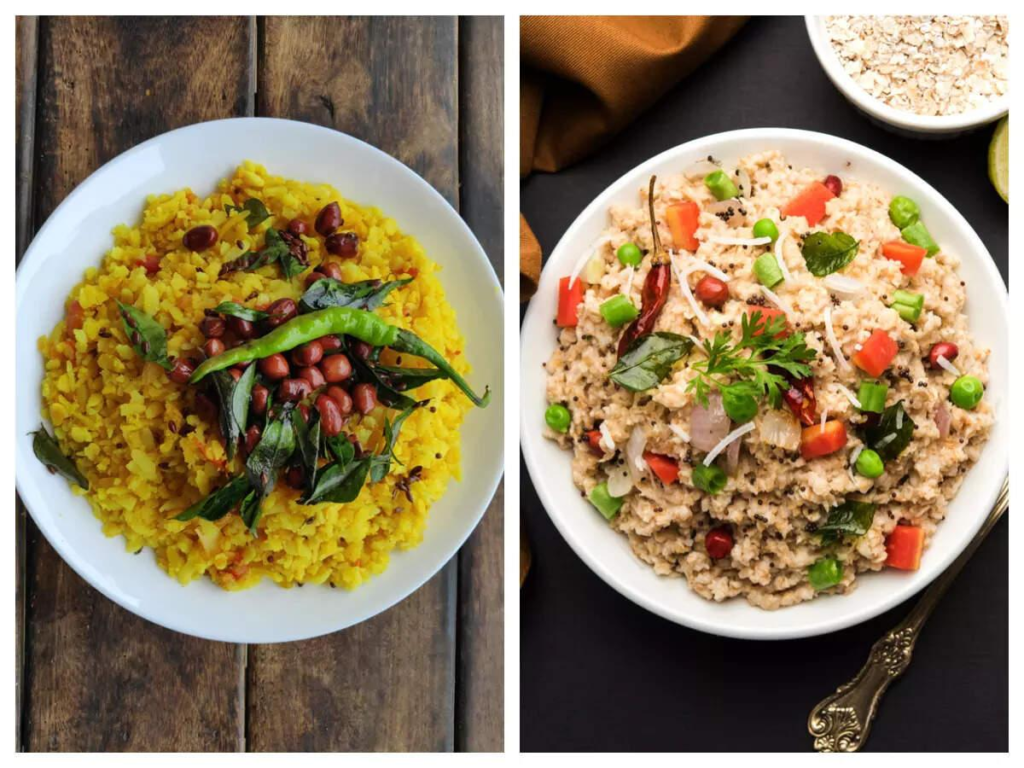
This is one of the most common breakfast debates in Indian households — so let’s settle it properly.
| Poha (standard veg, 1 tsp oil) | Upma / Rava Upma (standard, 1 tsp oil) | |
| Calories (per 200g cooked) | ~180–220 kcal | ~220–260 kcal |
| Protein | ~6–8g (with peanuts) | ~6–8g |
| Fiber | ~3–4g | ~3–4g |
| Glycemic Index | ~55–60 (with add-ons) | ~65–68 |
| Gluten-free | Yes | No (rava = semolina = wheat) |
| Digestibility | Very easy | Moderate |
| Iron content | Higher | Lower |
| Prep time | 10–12 minutes | 12–15 minutes |
The verdict for weight loss:
Poha wins slightly on calories and digestibility. It’s also the better choice for people with gluten sensitivity, bloating, or acidity issues. The iron content in poha is meaningfully higher than upma.
However, upma made with broken wheat (dalia upma) instead of rava is actually a stronger choice than standard poha — higher fiber, lower GI, and more filling. If you have options, dalia upma and vegetable poha are both excellent. Standard rava upma is the weakest of the three for weight loss.
The honest answer: The difference between poha and upma for weight loss is smaller than most people think. What matters far more is how much oil you use, whether you add protein, how many vegetables you include, and what portion size you serve yourself. A well-made poha and a well-made upma are both good. A poorly made version of either — excess oil, no vegetables, large portions — will work against you.
When to Eat Poha for Best Weight Loss Results
Poha is best eaten as breakfast — ideally between 7:30 AM and 9:30 AM. Here’s why the timing matters, as recommended a dietician for weight loss:
In the morning, your insulin sensitivity is higher, meaning your body handles carbohydrates more efficiently. Eating poha early means the carbohydrates get used for energy throughout a busy day rather than being stored. Eating the same bowl at 9 PM — after a sedentary day — has a very different metabolic outcome.
Poha is not ideal as a dinner option if weight loss is your goal. Keep it as a morning meal, and you’ll get the most from it — as every internal dietician for weight loss will advise.
What Richa’s Clients Actually Experience
In clinical practice, I’ve seen poha show up in three ways:
The one that works: Vegetable poha with peanuts and curd on the side, eaten before 9 AM, followed by a balanced lunch. Clients who eat this consistently report stable morning energy, no 11 AM snack craving, and easier adherence to their overall plan.
The one that doesn’t: Large plates of aloo poha with extra oil and no protein source, eaten at 10 AM as a rushed second breakfast after skipping the actual breakfast. This version spikes blood sugar, causes an energy crash, and leads to overeating at lunch.
The one that surprises people: Paneer poha — crumbled paneer stirred into the poha instead of added separately. Clients who try this almost always love it and say it keeps them full until 1–2 PM without any mid-morning snacking. If you haven’t tried it, please do.
Common Myths About Poha and Weight Loss — Cleared Up
“Poha is just rice, it’ll make me gain weight.”
Poha is made from rice, yes — but the parboiling and flattening process changes its starch structure. When prepared correctly with protein and vegetables, it does not spike blood sugar the way plain rice does. The context of the whole meal matters more than the base ingredient.
“I should eat less poha to lose weight.”
Not exactly. Eating a tiny portion of plain poha and feeling hungry an hour later is not a weight loss strategy. Eating a proper, well-balanced bowl with protein and vegetables — and feeling full till lunch — is. Adequate satiety from breakfast is what prevents overeating later in the day.
“Brown rice poha is much healthier.”
Brown or red poha does have slightly more fiber and nutrients than white poha. But the difference is not dramatic enough to make white poha unhealthy. If you can find brown poha, great. If not, don’t let perfect be the enemy of good.
“Poha is only good for breakfast.”
While it’s best as a morning meal for weight loss reasons, a small portion of poha can work well as a light pre-workout snack (30–45 minutes before exercise) because of its easily digestible carbohydrates that provide quick energy without heaviness.
Your Next Step to Better Health
Is poha good for weight loss? Yes — genuinely, not just technically.
It’s light, affordable, quick to make, easy on the stomach, rich in iron, and when built properly with protein and vegetables, it delivers a breakfast that’s balanced, filling, and well under 250 calories.
The key phrase is “built properly.” Poha alone, without protein or vegetables, cooked in too much oil, served in a large portion — that version isn’t going to help your weight loss goals.
But the version with peanuts, paneer or curd, seasonal vegetables, a squeeze of lemon, and a sensible portion? That’s one of the best things you can eat for breakfast in the Indian context. Full stop.
Don’t swap it for overnight oats just because it feels more “diet-y.” Your dadi’s breakfast was onto something.
Want a personalized meal plan that includes poha and other everyday Indian foods — built around your specific weight, health goals, and lifestyle? Book a consultation with Dt. Richa Doshi at The Health Studio, Mumbai.
Explore more from The Health Studio: