Managing PCOS, thyroid-related concerns, and weight can feel confusing, especially when there is so much conflicting diet advice available online.
You may come across lists of “best foods for PCOS,” foods to “avoid for thyroid,” or quick weight-loss diets. However, there is no single food that can treat PCOS or a thyroid condition, and there is no one diet that works for everyone.
A balanced and personalised eating pattern can help support overall nutrition, healthy lifestyle habits, and sustainable weight management.
The best approach is to focus on nutrient-dense foods, balanced meals, adequate protein, fibre, healthy fats, and portions that suit your individual requirements.
Protein-Rich Foods
Protein is an important part of a balanced diet and can help make meals more satisfying.
Including a source of protein in your meals can also make it easier to build a balanced plate.
Vegetarian protein options include:
- Dal
- Paneer
- Curd
- Tofu
- Soy
- Chana
- Rajma
- Moong
- Sprouts
Non-vegetarian options such as eggs, fish, chicken, and other protein-rich foods can also be included depending on your dietary preferences.
The right amount of protein depends on factors such as your age, activity level, dietary pattern, health needs, and personal goals.
Eat a Variety of Vegetables
Vegetables provide fibre along with a range of vitamins and minerals.
Instead of focusing on one specific “PCOS vegetable” or “thyroid-friendly vegetable,” aim for variety across the week.
You can include vegetables such as:
- Spinach and other leafy greens
- Carrots
- Beans
- Capsicum
- Cauliflower
- Broccoli
- Lauki
- Bhindi
- Pumpkin
- Cucumber
- Tomatoes
Different vegetables provide different nutrients, so variety is more useful than repeatedly eating the same few foods.
Include Whole Fruits
Fruits can be part of a balanced diet for people managing PCOS, thyroid-related concerns, or weight.
Practical options include:
- Apple
- Guava
- Orange
- Papaya
- Berries
- Pear
- Kiwi
- Pomegranate
Whole fruit is generally a more practical everyday choice than relying heavily on fruit juices.
You also do not need to completely remove fruit from your diet simply because you are trying to manage your weight. What matters is your overall eating pattern, portions, and individual nutritional needs.
Choose Whole and Minimally Processed Foods
A balanced diet does not need to be complicated.
Foods such as oats, dal, beans, vegetables, fruits, whole grains, nuts, seeds, and other minimally processed foods can form the foundation of everyday meals.
Try to make these foods a regular part of your diet while limiting excessive intake of highly processed foods, sugary drinks, and frequent ultra-processed snacks.
The goal is not perfection. It is to build a pattern of eating that is practical and consistent.
Include Healthy Fats in Appropriate Portions
Healthy fats can be included as part of a balanced eating pattern.
Examples include:
- Almonds
- Walnuts
- Peanuts
- Chia seeds
- Flaxseeds
- Pumpkin seeds
- Sesame seeds
These foods are nutrient-dense, but they can also be calorie-dense. Portion size therefore matters, particularly when weight management is one of your goals.
Build Balanced Meals
Instead of searching for one “best food for PCOS” or one “best food for thyroid,” focus on how you build your overall meal.
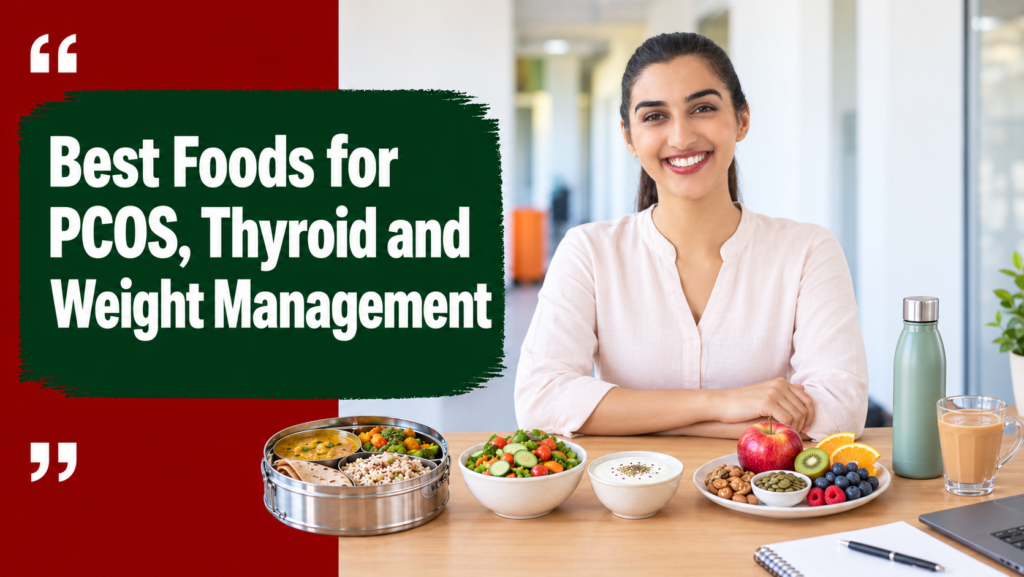
A simple balanced meal can include:
Protein + Vegetables + High-fibre carbohydrate + Healthy fat
For example:
Breakfast: Vegetable oats with curd
Lunch: Dal + vegetables + rice + salad
Snack: Fruit + a small portion of nuts
Dinner: Paneer or tofu + vegetables + a suitable carbohydrate source
The exact foods and portions should be adjusted according to your individual requirements.
What About Weight Management?
If weight management is one of your goals, extreme dieting is usually not the best place to start.
Instead, focus on sustainable habits such as:
- Eating balanced meals
- Including adequate protein
- Increasing vegetable and fibre intake
- Being mindful of portions
- Limiting frequent sugary drinks and highly processed snacks
- Staying physically active
- Getting adequate sleep
- Maintaining consistency
Weight management is influenced by many factors, including food intake, physical activity, sleep, lifestyle, health conditions, and individual differences.
A sustainable approach is generally more practical than repeatedly following short-term crash diets.
What About PCOS?
PCOS can affect people differently, so there is no universal “PCOS diet.”
A balanced eating pattern can focus on:
- Adequate protein
- Fibre-rich foods
- Vegetables
- Whole fruits
- Appropriate portions
- Minimally processed foods
- Regular and sustainable eating habits
The right approach may vary depending on your symptoms, lifestyle, food preferences, activity levels, and overall health.
Rather than eliminating large numbers of foods based on online lists, it is better to understand what works for your individual needs.
What About Thyroid Conditions?
Thyroid conditions can have different causes and nutritional considerations.
If you have a diagnosed thyroid condition, your diet should be considered alongside your medical care. Follow your doctor’s instructions regarding prescribed medication, timing, and any food or supplement considerations relevant to your treatment.
Do not stop, change, or replace prescribed thyroid medication based on information from social media or online diet plans.
Your overall diet should focus on adequate nutrition and a balanced eating pattern rather than trying to rely on a single “thyroid food.”
Foods to Include More Often
Instead of creating a very restrictive list, focus on adding more nutrient-rich foods to your regular diet.
These may include:
Protein Sources
Dal, paneer, curd, tofu, soy, beans, eggs, fish, or other suitable protein sources.
Fibre-Rich Foods
Vegetables, fruits, legumes, oats, and whole grains.
Healthy Fats
Nuts, seeds, and other suitable sources of unsaturated fats.
Whole and Minimally Processed Foods
Choose foods that provide useful nutrients and can be included comfortably in your everyday routine.
Foods to Limit
You do not necessarily need to completely ban individual foods.
However, it can be helpful to limit frequent or excessive intake of:
- Sugary beverages
- Highly processed snacks
- Excessive sweets
- Deep-fried foods
- Frequent fast food
- Large portions of calorie-dense foods
The focus should be on your overall eating pattern rather than labelling individual foods as completely “good” or “bad.”
Can You Lose Weight With PCOS and Thyroid Issues?
Weight management can be more complex when you have conditions such as PCOS or a thyroid disorder.
This does not mean that everyone with these conditions will have the same experience.
Factors such as medication, sleep, activity, eating habits, stress, hormonal health, and individual health history can all be relevant.
That is why a personalized approach can be more useful than copying a generic weight-loss diet from the internet.
Common Diet Mistakes to Avoid
Following Extremely Restrictive Diets
Cutting out multiple food groups without a clear reason can make your diet difficult to maintain and may reduce variety.
Depending on “Superfoods”
No single food can make up for an overall unbalanced diet.
Avoiding All Carbohydrates
Carbohydrates are present in many nutritious foods. The type, portion, and overall meal balance matter more than simply eliminating carbohydrates.
Skipping Meals to Lose Weight
Skipping meals is not automatically better for weight management. Your overall eating pattern should be practical and sustainable for your lifestyle.
Following Online Advice Without Considering Your Health
PCOS and thyroid conditions can differ significantly between individuals. Advice that works for one person may not be appropriate for another.
A Simple Approach to Healthy Eating
You do not have to completely change your diet overnight.
Start with simple changes:
Add protein to your meals.
Choose a suitable protein source at breakfast, lunch, and dinner.
Eat more vegetables.
Try to include different vegetables throughout the week.
Choose whole fruits.
Include fruit according to your individual requirements instead of automatically avoiding it.
Pay attention to portions.
Even nutritious foods can contribute significant calories when eaten in excessive amounts.
Stay active.
Regular physical activity can support overall health and complement a balanced eating pattern.
Focus on consistency.
A realistic diet that you can follow regularly is more useful than a perfect plan that lasts only a few days.
When Should You Consider Personalised Nutrition Guidance?
A personalised nutrition plan may be useful if you:
- Have PCOS and feel confused about what to eat
- Have a thyroid condition and want help building balanced meals
- Are trying to manage your weight
- Follow a vegetarian or other specific dietary pattern
- Have a busy lifestyle and struggle with meal planning
- Keep switching between different diet trends
- Want a nutrition plan based on your food preferences and routine
A dietitian can help you understand your current eating pattern and develop practical recommendations based on your individual needs.
Final Takeaway
There is no single best food for PCOS, thyroid health, or weight management.
Instead of looking for one miracle food, focus on the bigger picture: balanced meals, adequate protein, vegetables, whole fruits, fibre-rich foods, healthy fats, appropriate portions, physical activity, adequate sleep, and consistent healthy habits.
For people managing PCOS, thyroid-related concerns, or weight, a personalised approach can be more practical than following a generic internet diet.
Your nutrition plan should fit your health needs, lifestyle, food preferences, and personal goals rather than forcing you to follow a rigid list of foods.
Remember: food can support a healthy lifestyle, but it does not replace appropriate medical diagnosis or treatment. If you have a diagnosed thyroid condition, PCOS, or persistent symptoms, discuss your individual needs with a qualified healthcare professional.
Frequently Asked Questions
What are the best foods for PCOS and weight management?
Protein-rich foods, vegetables, whole fruits, legumes, whole grains, and appropriate sources of healthy fats can form part of a balanced eating pattern. The right foods and portions vary from person to person.
What foods are good for thyroid health?
There is no single food that treats a thyroid condition. A varied and balanced diet can support overall nutrition, while prescribed thyroid treatment should be followed as advised by your doctor.
Can I eat fruit if I have PCOS and want to lose weight?
Whole fruits can generally be included as part of a balanced diet. The appropriate amount depends on your overall diet and individual nutritional needs.
Should I stop eating rice if I have PCOS or thyroid problems?
Not necessarily. Rice can be part of a balanced diet. Portion size, meal balance, food choices, and your overall eating pattern are more important than automatically eliminating one food.
Can a dietitian create a diet plan for PCOS, thyroid and weight management?
Yes. A qualified dietitian can help create personalized nutrition recommendations based on your health history, lifestyle, food preferences, and goals.