You’ve tried the expensive shampoos. You’ve oiled your hair every Sunday like your grandmother told you to. You’ve switched to a sulfate-free routine, cut out heat styling, and maybe even tried a few hair masks from Pinterest. And yet — the hair fall continues, the thickness just isn’t there, and every morning your shower drain tells a story you’d rather not see.
Here’s the thing nobody tells you: no shampoo in the world can fix a problem that starts on your plate.
Hair is one of the fastest-growing tissues in the human body. Every single strand depends on a constant supply of nutrients — protein, vitamins, minerals, and healthy fats — delivered through your bloodstream from the food you eat. When that supply is inconsistent or incomplete, your body does something very logical. It considers hair “non-essential” and redirects those nutrients to vital organs like your heart, brain, and kidneys. Your hair is essentially the last in line.
This means that no matter how good your external hair care routine is, if your diet isn’t supporting hair growth from the inside, you’re fighting a losing battle.
At The Health Studio, some of the most common concerns we hear from new clients — especially women dealing with PCOS, thyroid issues, and hormonal imbalances — involve hair thinning and excessive shedding. And in almost every case, what we find is a nutritional gap, not a scalp problem.
Let’s fix that.
Why Your Hair Needs a Balanced Diet (Not Just One Magic Nutrient)
When most people hear “diet for hair growth,” they immediately think protein. Protein matters, absolutely. But reducing hair health to just one nutrient is like saying a house only needs bricks. You also need cement, windows, wiring, and a roof.
Hair growth relies on a whole team of nutrients working together:
Protein forms the actual structure of your hair strand. Hair is made of keratin, which is a protein. Without enough dietary protein, your body simply cannot build new hair.
Iron carries oxygen to your hair follicles through the bloodstream. Low iron — even subclinical iron deficiency that doesn’t yet show as anemia — is one of the leading dietary causes of hair loss in Indian women.
Zinc regulates the oil glands around follicles and plays a direct role in hair tissue repair and growth. A zinc deficiency is closely linked to hair shedding and a flaky scalp.
Biotin (Vitamin B7) supports keratin production and is one of the most researched nutrients for hair strength and thickness.
Vitamin C does two things: it is a potent antioxidant that protects follicles from oxidative damage, and it dramatically improves your body’s ability to absorb iron from plant-based food sources.
Omega-3 Fatty Acids nourish the scalp, reduce inflammation around follicles, and give hair that natural shine and thickness that no serum can replicate.
Vitamin D deficiency has been directly linked to alopecia and premature hair loss in multiple studies. Given that India has one of the highest rates of Vitamin D deficiency despite all the sunshine, this one is especially worth paying attention to.
The goal of a balanced diet for hair growth isn’t to focus obsessively on any one of these. It’s to eat in a way that consistently provides all of them.
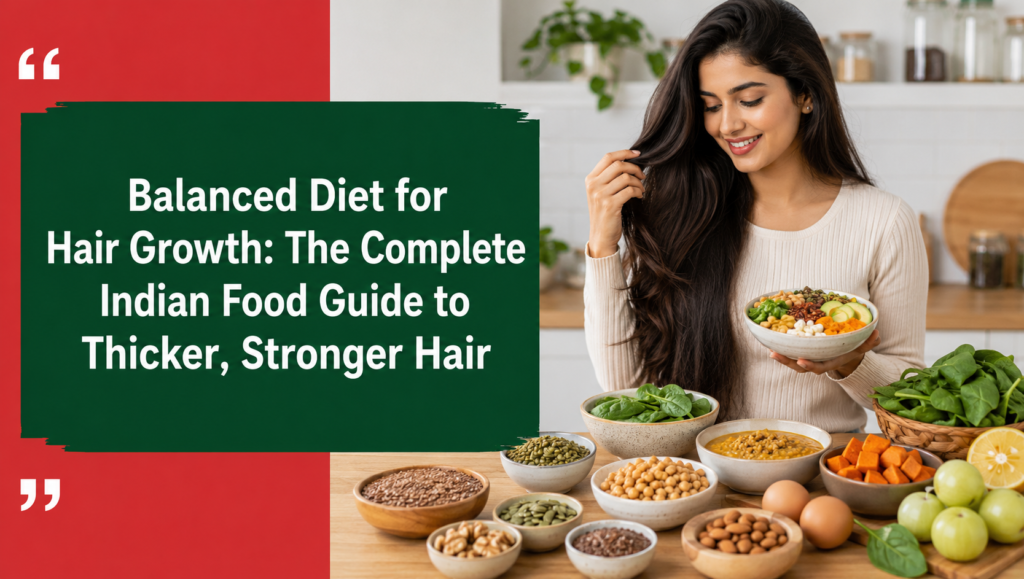
The Best Indian Foods for Hair Growth
The good news is that Indian cuisine — when cooked properly and eaten in variety — is genuinely rich in hair-supportive nutrients. The problem is that most people eat the same five or six dishes repeatedly, missing out on the full nutritional spectrum their hair needs.
Here’s your complete guide to what to eat and why.
1. Eggs (For Protein + Biotin)
If you eat eggs, they are one of the most efficient hair growth foods available. A single egg provides high-quality complete protein along with biotin, selenium, and zinc — essentially a mini hair health package in one affordable, quick-to-cook food. Aim for at least one whole egg daily. The yolk is where the biotin lives, so don’t skip it.
2. Lentils and Legumes (For Protein + Iron + Biotin)
Dal is your hair’s best friend — and most Indians eat it far less frequently than they should. Masoor dal, moong dal, chana, and rajma are all excellent sources of plant-based protein, iron, zinc, and biotin. The key is pairing them with a Vitamin C source like lemon juice or tomatoes to maximize iron absorption. A squeeze of lemon over your dal isn’t just for taste — it’s actually improving how much iron reaches your bloodstream.
Aim for at least one pulse-based dish every single day. Rotating through different dals gives you a wider range of amino acids and minerals.
3. Spinach and Dark Leafy Greens (For Iron + Vitamins A & C)
Palak, methi, and other dark leafy greens are loaded with iron, folate, Vitamin A, and Vitamin C. Vitamin A helps the scalp produce sebum, which is the natural conditioning oil that keeps your hair moisturized and healthy. Vitamin C aids iron absorption and fights oxidative damage to follicles. Try to include a green sabzi at least four or five times a week — and again, add lemon to increase iron absorption.
4. Nuts and Seeds (For Omega-3 + Zinc + Vitamin E)
Walnuts, flaxseeds, pumpkin seeds, and sunflower seeds are nutritional powerhouses for hair. Walnuts are one of the few plant-based sources of omega-3 fatty acids, and they also contain Vitamin E which protects follicle cell membranes from damage. Pumpkin seeds are particularly high in zinc. A small handful of mixed nuts and seeds as a daily snack is one of the simplest upgrades you can make to your hair growth diet.
5. Sweet Potato (For Beta-Carotene / Vitamin A)
Sweet potato is one of the richest sources of beta-carotene, which your body converts to Vitamin A. Since Vitamin A is essential for sebum production and cell turnover in the scalp, regular sweet potato consumption genuinely supports a healthier scalp environment. Replace your regular evening snack with boiled or roasted sweet potato a few times a week.
6. Amla (For Vitamin C + Antioxidants)
Amla (Indian gooseberry) is one of the richest natural sources of Vitamin C on the planet — significantly higher per gram than even citrus fruits. It improves iron absorption, fights free radical damage to follicles, and has been used in traditional Indian medicine for hair health for centuries. Fresh amla juice, dried amla, or amla in a chutney — any form works and the benefits are real.
7. Curd and Paneer (For Protein + B Vitamins + Probiotics)
Beyond their protein content, fermented dairy like curd provides B vitamins and probiotics. A healthy gut microbiome is increasingly being linked to better nutrient absorption overall, which means if your gut isn’t absorbing nutrients properly, your hair can’t access them even if you’re eating all the right foods. A small bowl of curd daily supports both gut health and hair nutrition.
8. Flaxseeds (For Omega-3 + Lignans)
Ground flaxseeds are one of the most accessible omega-3 sources for vegetarians. Add one tablespoon of ground flaxseeds to your morning smoothie, roti dough, or curd. The omega-3s reduce scalp inflammation and improve hair texture and thickness over time.
9. Carrots (For Beta-Carotene + Vitamin A)
Like sweet potato, carrots are rich in beta-carotene. Raw carrots as a snack or in a salad are a simple, low-effort addition that consistently supports Vitamin A levels for scalp health.
10. Sunflower Seeds (For Vitamin E + Selenium)
Vitamin E is an antioxidant that improves blood circulation in the scalp, which means better nutrient delivery to your follicles. Selenium works alongside it to protect follicle cells from oxidative stress. A small handful of sunflower seeds daily makes a measurable difference over weeks.
Foods That Are Quietly Damaging Your Hair
Just as important as what you eat is what you need to cut back on. These foods don’t just provide no benefit to hair — they actively work against it.
Excess sugar causes rapid spikes in blood insulin levels, which leads to an increase in androgens (male hormones). Elevated androgens are a key driver of hair thinning, especially in women with PCOS. Reducing sugar intake is one of the single most impactful dietary changes for hormonally-driven hair loss.
Crash diets and extreme calorie restriction deprive your body of the nutrients and energy it needs to sustain hair growth. When calories drop too low, hair enters a resting phase and begins shedding — a condition called telogen effluvium. Sustainable, gradualweight loss always protects hair better than any rapid weight loss approach.
Processed and packaged foods are typically high in refined carbohydrates, inflammatory vegetable oils, and sodium, while being stripped of the micronutrients hair needs. A diet heavy in biscuits, namkeen, instant noodles, and packaged snacks is a direct path to nutritional deficiency.
Excess alcohol depletes zinc and B vitamins — two nutrients your hair cannot do without.
A Sample 7-Day Balanced Diet Plan for Hair Growth
Here’s what a practical, hair-supportive week looks like using everyday Indian foods. This is a general template; individual nutritional needs vary based on age, health conditions, and activity levels, which is why a personalized plan from a dietitian always produces the best results.
Day 1
- Breakfast: 2 boiled eggs + 1 bowl of poha with peanuts
- Lunch: Masoor dal + palak sabzi + 2 rotis + curd
- Snack: A small handful of walnuts and pumpkin seeds
- Dinner: Rajma with brown rice + salad with lemon dressing
Day 2
- Breakfast: Methi paratha + curd + fresh amla juice
- Lunch: Moong dal + carrot-beet sabzi + roti
- Snack: Boiled sweet potato with rock salt
- Dinner: Egg curry (or paneer) + brown rice + cucumber raita
Day 3
- Breakfast: Oats with ground flaxseeds + a handful of walnuts + banana
- Lunch: Chole + roti + spinach salad with lemon
- Snack: 1 handful mixed seeds (sunflower, pumpkin, flax)
- Dinner: Masoor soup + 2 rotis + curd
Day 4
- Breakfast: 2 eggs scrambled + whole wheat toast + fresh orange juice
- Lunch: Palak dal + roti + carrot sabzi
- Snack: Amla chutney with a small serving of makhana
- Dinner: Rajma rice + curd + salad
Day 5
- Breakfast: Sattu sharbat + methi thepla + curd
- Lunch: Any dal + drumstick (moringa) sabzi + roti
- Snack: Walnuts + 1 banana
- Dinner: Kadhi + brown rice + spinach raita
Day 6
- Breakfast: Moong dal chilla + curd + fresh amla
- Lunch: Chana masala + 2 rotis + tomato-cucumber salad with lemon
- Snack: Roasted pumpkin seeds + herbal tea
- Dinner: Egg bhurji (or tofu) + roti + palak soup
Day 7
- Breakfast: Oats upma with vegetables + a boiled egg
- Lunch: Mixed dal + green sabzi + roti + curd
- Snack: Sweet potato chaat with lemon
- Dinner: Rajma or chole + rice + cucumber raita
How Long Before You See Results?
This is the question everyone wants answered, and the honest answer is: it takes time. Hair grows approximately 1–1.5 cm per month, and the impact of dietary changes on hair health typically becomes noticeable after 3 to 6 months of consistent eating. This isn’t because the diet isn’t working — it’s because the hair growth cycle is slow by nature.
What most people notice first, within the first 4–6 weeks, is a reduction in shedding. Then, over the following months, comes improved texture, thickness, and new growth.
Consistency matters far more than perfection here. Eating the right foods 80% of the time for six months will do far more for your hair than any topical treatment or supplement.
When Diet Alone Isn’t Enough
If you’ve been eating well for several months and still experiencing significant hair loss, it’s worth looking deeper. Conditions like hypothyroidism, PCOS, iron deficiency anemia, and chronic Vitamin D deficiency can all cause hair loss that persists even with a good diet — because the underlying hormonal or nutritional problem needs targeted management.
At The Health Studio, we work with clients to identify exactly what’s driving their hair concerns — whether it’s a dietary gap, a hormonal imbalance, a thyroid issue, or a combination — and build a nutrition plan that addresses the root cause rather than just the symptom.
If your hair has been struggling despite your best efforts, it might be time to stop guessing and start getting answers.
Connect with The Health Studio and let’s find out exactly what your hair needs.
Frequently Asked Questions
Q: Which nutrient deficiency causes the most hair loss?
A: Iron deficiency is one of the most common dietary causes of hair loss, especially in women. However, deficiencies in protein, Vitamin D, zinc, and biotin can also contribute significantly. Often it’s a combination rather than a single deficiency.
Q: Can I take supplements instead of changing my diet?
A: Supplements can help fill specific gaps, but they should complement a balanced diet, not replace it. Whole foods provide nutrients in combinations and ratios that supplements cannot fully replicate, and they come with fiber, antioxidants, and other compounds that support overall health.
Q: Does eating more protein alone improve hair growth?
A: Protein is essential, but hair growth requires a full range of nutrients. Eating only more protein without addressing iron, zinc, biotin, and omega-3 levels will produce limited results.
Q: How much water should I drink for hair health?
A: Proper hydration supports overall nutrient transport and scalp health. Aim for 8–10 glasses of water daily, and include hydrating foods like cucumber, watermelon, and curd in your diet.
Q: Is hair fall related to gut health?
A: Yes. Poor gut health impairs nutrient absorption, which means even if you’re eating the right foods, your body may not be absorbing them effectively. Probiotics from curd and fermented foods support a healthy gut, which in turn supports better nutrient availability for hair.
Tags: balanced diet for hair growth, hair growth foods, diet for hair loss, Indian diet for hair, foods for thick hair, biotin foods, iron for hair, hair fall diet, nutrition for hair growth