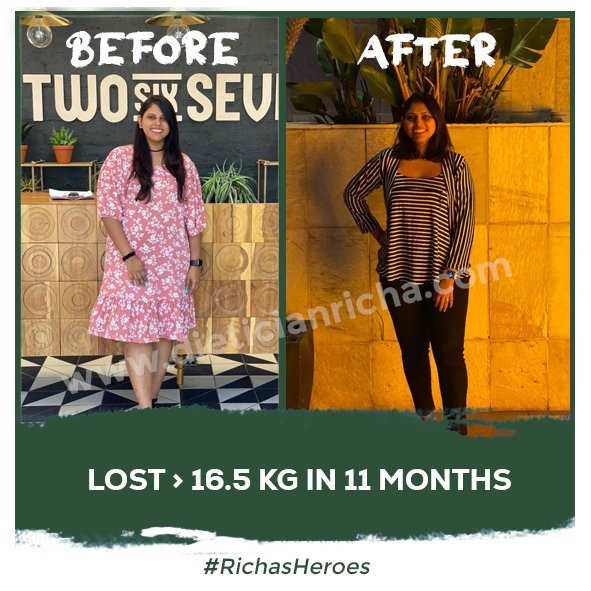
Let me tell you about a client I see almost every week.
She works in a corporate office in Mumbai. Leaves home by 8 AM, gets back by 8 PM — sometimes later. Lunch is either skipped or grabbed from the canteen. Dinner is whatever is fastest. Weekends are for errands, family, and catching up on sleep.
She’s tried diets before. Keto for two weeks. Salad lunches that lasted three days. A detox plan she found on Instagram. None of it stuck.
When she came to me, she said something that stayed with me: “I know what to eat, Richa. I just don’t have the time to actually do it.”
Here’s what I told her — and what I’m going to tell you too.
You don’t need more time. You need a smarter system.
Weight loss for working professionals doesn’t fail because of willpower. It fails because most diet plans are designed for people who have hours to meal prep, the freedom to eat at exact times, and no back-to-back meetings. That’s not your life. So let’s talk about what actually works in your life.
The Real Reason Busy People Struggle to Lose Weight

Before we get into what to do, let’s be clear about what’s actually going wrong.
It’s not that you’re lazy. It’s not that you don’t care. It’s that your daily environment is working against you.
You skip breakfast because mornings are chaotic. By 11 AM you’re starving, so you eat whatever’s in the pantry — usually biscuits or namkeen. Lunch gets delayed to 3 PM and you overeat because you’re ravenous. You’re too tired to cook dinner so you order in. And by the time you sit down to eat, it’s 9:30 PM and you’re eating a heavy meal right before bed.
Sound familiar?
This is the pattern that causes weight gain in working professionals. Not a lack of diet knowledge. The answer to how to lose weight with a busy schedule isn’t a stricter diet — it’s fixing this pattern, one piece at a time.
Start Here: The Two Things That Actually Move the Needle
If you take nothing else from this article, take these two things.
Eat something with protein in the morning — no matter what.
This one habit alone can change everything. A protein-rich breakfast reduces hunger hormones for the rest of the day. It stops the 11 AM crash. It makes you less likely to overeat at lunch. It keeps your energy steady through afternoon meetings.
It doesn’t need to be elaborate. A boiled egg and a glass of buttermilk. Two moong dal chillas you made the night before and reheated. Greek yogurt with a handful of nuts. Five minutes, maximum.
If you currently leave home on an empty stomach, just fixing this one habit will show results within two weeks.
Stop eating dinner after 8:30 PM.
This is the single most impactful change for most working professionals. Not because late eating is “toxic” but because late-night dinners tend to be heavy, rushed, and followed immediately by sleep — giving your body no time to burn any of it.
If your schedule genuinely doesn’t allow dinner before 8:30, keep it light. A bowl of dal with one roti. A vegetable soup. Not a full three-course meal.
Everything else in this guide builds on these two foundations.
Your Weekday Eating — Practically Rethought
The Morning Rush (6–9 AM)
The goal here isn’t a perfect breakfast. It’s any breakfast that has protein in it.
Good options for rushed mornings:
- 2 boiled eggs (prep 4–5 the night before, refrigerate, grab and go)
- A small bowl of overnight oats with curd and chia seeds — assembled the previous night, takes zero morning effort
- Leftover moong dal chillas from dinner, reheated in two minutes
- A banana with 2 tablespoons of peanut butter — no cooking at all
- A glass of sattu drink (roasted gram flour + water + jeera + lemon) — 5 seconds to make, surprisingly filling
You don’t need to sit down for 30 minutes. You just need something in your system before you leave.
The Office Hours Problem (10 AM–6 PM)
This is where most professionals completely fall apart — and it’s not their fault. Office environments are designed around convenience food: canteen thalis loaded with oil, vending machines, chai with biscuits every hour, birthday cakes, client lunches.
Here’s a realistic diet plan for office workers in India that actually fits into a real workday:
Mid-morning (around 10:30–11 AM): Keep a small snack at your desk. Roasted chana, a handful of almonds, or a small fruit. This bridges the gap between breakfast and lunch and stops you from arriving at lunch completely starved.
Lunch (ideally 1–2 PM): If you eat from the canteen, the order of eating matters more than what you eat. Start with salad or raita, then dal and sabzi, then roti or rice — not the other way around. This simple change reduces how much you eat overall without requiring any willpower.
If you bring lunch from home (more on this below), you’re already ahead. A simple dal-roti-sabzi tiffin beats anything the canteen serves.
The 4 PM problem: This is when most professionals lose the plot. You’re tired, your blood sugar dips, and the snack counter looks very appealing. Fix this by having something small and protein-based ready — Greek yogurt, peanuts, a boiled egg, roasted makhana. The goal is to take the edge off hunger so you don’t arrive home ravenous and eat everything in sight.
Never skip lunch to “save calories.” This is one of the most common mistakes I see with working professionals. Skipping lunch doesn’t save you — it just transfers the hunger to the evening when you’re tired and have zero food discipline left.
Meal Prep for Weight Loss in India — The Realistic Version
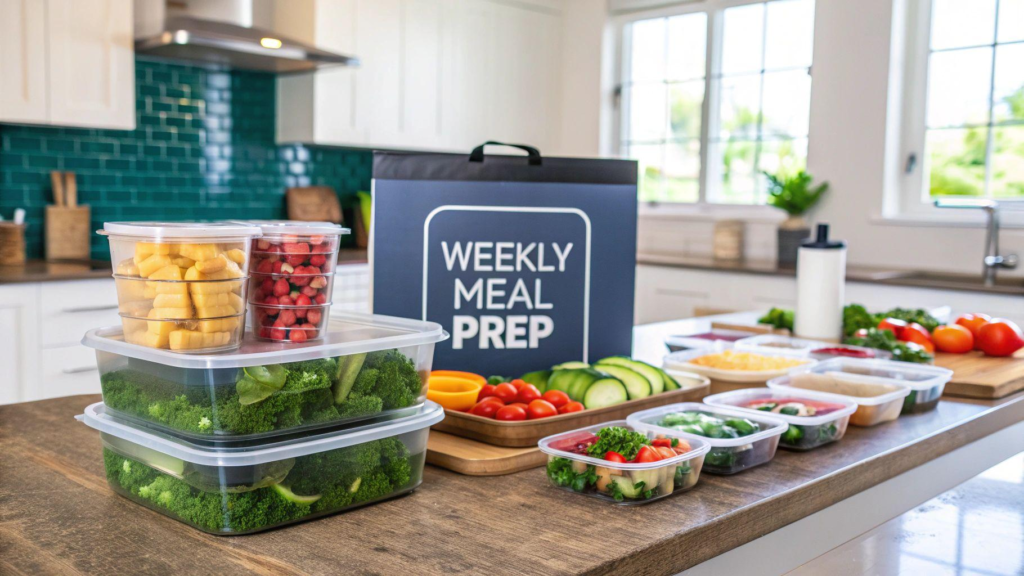
Let me be upfront: I’m not going to tell you to spend four hours on Sunday prepping seventeen different meals in labeled glass containers. That’s aspirational, not realistic for most people.
Here’s what meal prep for weight loss in India actually looks like when you have a busy schedule:
Sunday, 45 minutes is enough.
- Cook a large batch of any one dal or legume (rajma, chole, moong, or chana). This keeps well for 3–4 days in the fridge and forms the protein base of multiple lunches.
- Wash and chop your vegetables for the week. Stored in a container in the fridge, this saves 10 minutes every evening.
- Hard-boil 4–5 eggs. Instant protein for the next few days.
- Make a big batch of brown rice or cook extra rotis the night before. Reheated the next day, they’re perfectly fine.
That’s it. You don’t need more. With these basics in the fridge, putting together a decent meal takes 10 minutes instead of 45.
The tiffin strategy: If you can carry lunch from home even three days a week — not five, just three — you’ll eat significantly better than if you rely on the canteen every day. A simple dal + sabzi + 2 rotis packed the previous night takes no extra effort if you’ve already cooked dinner.
Healthy Eating Habits for Working Professionals That Don’t Require Willpower
Here’s something I believe deeply: sustainable habits work because they’re easy, not because you’re disciplined.
Replace, don’t restrict. Instead of “no chai,” switch to one cup of masala chai without sugar and have roasted chana instead of biscuits alongside it. Instead of “no canteen food,” eat from the canteen but start every meal with a glass of water and some salad first. Small swaps, not complete overhauls.
Use your commute. If you travel by train or metro, that’s potential walking time on both ends. A 15-minute walk to the station in the morning and back in the evening adds up to more activity than most gym sessions you’d never actually attend.
Make water unavoidable. Keep a large water bottle on your desk, always visible. Most working professionals are chronically mildly dehydrated, which the body frequently misreads as hunger. Staying hydrated reduces unnecessary snacking more than any diet trick.
Eat at your desk if you must — but eat mindfully. Scrolling through emails while shoveling food leads to overeating because you’re not registering what you’re consuming. Even if you can’t take a proper lunch break, put your phone down for ten minutes while you eat.
Sleep is not optional. I know this doesn’t sound like a diet tip. But chronic sleep deprivation raises cortisol and ghrelin — the stress and hunger hormones — and actively works against weight loss even when your diet is perfect. Professionals who sleep less than 6 hours tend to eat 300–400 more calories per day than those who sleep 7–8 hours. Protecting your sleep is protecting your weight loss.
What to Eat When You’re Ordering In
Some nights, cooking simply isn’t happening. That’s reality. Here’s how to order in without completely undoing your progress:
Better choices from common apps:
- Dal khichdi or plain khichdi over biryani or fried rice
- Grilled or tandoori dishes over gravies swimming in cream
- Roti over naan (naan is made with maida and typically has added fat)
- Raita or salad as an add-on — most restaurants offer this
- Soups as a starter to slow down how fast you eat the main course
The key isn’t to find “healthy restaurant food” — it’s to make slightly better choices within whatever you’re already ordering.
And if you ordered pizza on a Friday night? It’s fine. One meal does not make or break anything. What matters is what you do the other 20 meals of the week.
A Sample Day in the Life — For a Busy Professional
This isn’t a strict plan. It’s a realistic picture of what a weight-loss-friendly workday can look like without any dramatic changes.
6:30 AM: Wake up. Glass of warm water.
7:15 AM: Quick breakfast before leaving — 2 boiled eggs or a bowl of overnight oats with curd. Takes 3 minutes to eat.
10:30 AM: Mid-morning snack at the desk — a small handful of almonds or roasted chana.
1:30 PM: Lunch — tiffin from home (dal + sabzi + 2 rotis) or canteen meal starting with salad first.
4:00 PM: A cup of green tea or black coffee + roasted makhana or peanuts.
6:30 PM: Leave office. Walk to station or parking if possible.
8:00 PM: Dinner — something light. Dal-chawal or sabzi-roti. If ordering in, a grilled option or dal khichdi.
10:00 PM: In bed. Phone down.
No gym required (though movement always helps). No exotic superfoods. No meal weighing. Just better timing, better choices, and consistency.
The One Question I Get Asked Most
“But Richa, I’ve tried all of this and I still can’t lose weight. What am I missing?”
Usually, it’s one of three things:
Portion sizes are larger than they seem. Homemade food is healthy, but three rotis with extra ghee and a full bowl of rice at dinner adds up more than most people realize. You don’t need to count every calorie, but being loosely aware of portions matters.
Stress is working against you. High-pressure jobs mean elevated cortisol levels. Cortisol promotes fat storage, particularly around the belly. Managing stress — even through 10 minutes of quiet time before bed, a short walk, or just stepping away from your screen for lunch — makes a measurable difference to weight loss outcomes.
The weekends undo the weekdays. Eating well Monday to Friday and then completely letting go on Saturday and Sunday leaves you roughly at the same place every week. Weekends don’t need to be restrictive — but one heavy meal per day, not three.
If you’ve been doing everything right and still not seeing results, it’s worth getting a professional assessment. Hormonal imbalances, thyroid issues, or PCOS can all make weight loss harder than it should be — and a personalized plan from a clinical dietitian is very different from a generic diet you found online.
The Truth About “No Time”
The professionals who successfully lose weight while working demanding jobs aren’t doing anything magical. They’re not waking up at 5 AM to cook elaborate meals. They’re not spending their lunch breaks at the gym.
They’ve just stopped waiting for the perfect conditions and started making small, consistent choices within the imperfect conditions they already have.
A better breakfast. A snack at the desk. A slightly lighter dinner. Three days of home tiffin instead of zero.
None of these things require extra time. They require a decision.
And that decision — made consistently, without perfection — is what actually creates results.
Dt. Richa Doshi is a certified clinical dietitian and nutritionist at The Health Studio, Mumbai. With 13+ years of experience, she helps working professionals, homemakers, and individuals with specific health conditions achieve sustainable results — without crash diets or unrealistic routines. Book a consultation to get a plan built around your actual life.