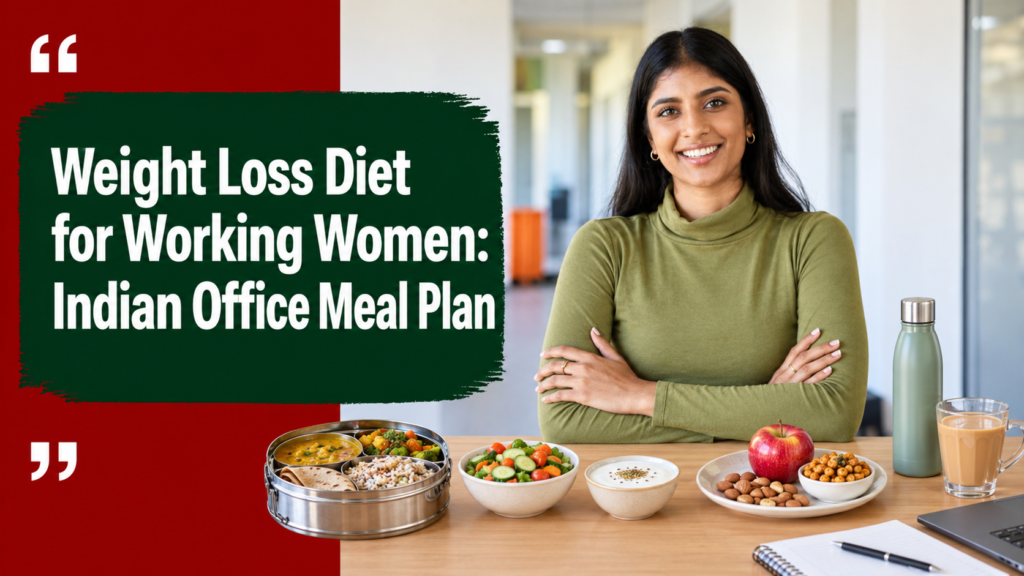
Managing your diet while working full-time can be challenging. Long office hours, commuting, meetings and busy schedules can make it difficult to maintain regular meals.
However, a weight loss diet for working women does not have to involve complicated recipes or separate meals every day.
The goal is to create a practical Indian diet plan for weight loss that fits your work schedule, food preferences and lifestyle.
With some simple meal planning, you can enjoy balanced home-cooked meals and make healthier choices even on busy working days.
Breakfast Before Work
Starting your day with a balanced breakfast can make it easier to maintain a regular eating routine.
Some simple Indian breakfast options for weight loss include:
- Moong dal chilla with curd
- Vegetable oats
- Besan chilla with vegetables
- Vegetable poha with a protein-rich side
- Idli with sambar
- Paneer bhurji with an appropriate carbohydrate portion
Try to include a source of protein along with fibre and an appropriate amount of carbohydrates.
Avoid regularly skipping breakfast if it causes excessive hunger or makes it difficult to manage your meals later in the day.
Carry Lunch to the Office
A homemade lunch can make it easier to manage ingredients, portions and meal choices during a busy workday.
A simple healthy office lunch for weight loss could include:
- Dal
- Vegetable sabzi
- Roti or rice
- Salad
- Curd
You can also prepare paneer or tofu with vegetables when you want a different protein source.
The exact portions should depend on your individual nutritional requirements and overall daily diet.
Smart Office Snacks
Long gaps between meals can sometimes lead to overeating later.
Keeping simple snacks available at work can help you avoid depending entirely on biscuits, fried snacks or vending-machine foods.
Some practical office snacks for weight loss include:
- Whole fruit
- Roasted chana
- Nuts in an appropriate portion
- Unsweetened curd
- Homemade snacks
Choose snacks according to your hunger and overall nutritional needs rather than eating simply because it is snack time.
What About Tea and Coffee?
Tea and coffee can fit into a healthy eating routine.
However, if you are having several cups throughout the day, consider the amount of sugar, milk and other high-calorie additions being used.
You do not necessarily need to stop drinking tea or coffee. Instead, pay attention to how they fit into your overall diet.
What If You Work Late?
Late working hours can make dinner timing difficult.
If you reach home late, you do not necessarily need to skip dinner. Instead, choose a simple and balanced meal that is appropriate for your hunger and nutritional requirements.
Some practical options include:
- Dal with vegetables
- Paneer with vegetables
- Tofu with vegetables
- Vegetable khichdi with curd
- Roti with dal and vegetables
Avoid making dinner unnecessarily heavy simply because you missed or delayed an earlier meal.
Eating at the Office or Ordering Food
Working women may not always be able to carry homemade food.
When ordering lunch at work, look for meals that include a protein source, vegetables and an appropriate carbohydrate portion.
For example, you could choose:
- Dal with roti and vegetables
- Rice with dal and vegetables
- Paneer with roti and salad
- Idli with sambar
- A balanced Indian meal with appropriate portions
You do not need to eat perfectly at every meal. The overall pattern of your diet matters more than one individual meal.
Don’t Depend on Crash Diets
Busy professionals sometimes turn to very low-calorie diets because they want quick results.
However, extremely restrictive eating can be difficult to sustain and may make it harder to meet your nutritional requirements.
A sustainable weight loss diet for working women should be practical enough to follow alongside your job, commute and daily responsibilities.
Instead of asking, “How little can I eat?”, focus on:
- What can I eat consistently?
- Am I getting enough protein?
- Am I including vegetables and fibre?
- Are my portions appropriate?
- Can I maintain this routine during busy workdays?
Simple Working-Woman Meal Structure
A practical office-day routine could look like this:
Morning: Balanced breakfast
Office: Fruit, curd or roasted chana if hungry
Lunch: Protein + vegetables + appropriate carbohydrate
Evening: Light snack if required
Dinner: Balanced and portion-controlled meal
This is a general structure, not a personalized diet plan. Your actual food choices and portions should depend on your individual nutritional requirements.
Tips for Following a Weight Loss Diet With a Busy Schedule
You do not need to spend hours preparing special meals.
A few simple habits can make your routine easier:
Plan Your Meals in Advance
Decide what you will eat for breakfast and lunch the night before. This can reduce last-minute food choices.
Keep Easy Foods Available
Keep practical options such as fruits, roasted chana, curd or nuts available at home or work.
Prepare Ingredients in Advance
You can wash and cut vegetables, prepare dal or plan your lunch ingredients ahead of time to reduce cooking time on busy mornings.
Avoid Long Gaps Between Meals
You do not need to eat at fixed times if you are not hungry, but extremely long gaps followed by very large meals may not suit everyone.
Focus on Consistency
Your diet does not have to be perfect every day. A realistic routine that you can follow consistently is more practical than a highly restrictive plan that lasts only a few days.
Can Working Women Lose Weight Without Giving Up Indian Food?
Yes, an Indian eating pattern can be adapted to support weight management.
You do not necessarily need to completely eliminate roti, rice, poha, idli or other traditional foods.
Instead, focus on:
- Appropriate portions
- Adequate protein
- Plenty of vegetables
- Fibre-rich foods
- Balanced meals
- Regular movement
- Sustainable habits
The right approach depends on your individual nutritional requirements, lifestyle and health goals.
When Can a Personalized Diet Plan Help?
If your work schedule, commute or food preferences make it difficult to follow a regular eating routine, personalized nutrition guidance can help you create a plan that fits your lifestyle.
A qualified dietitian can help you structure meals, portions and food choices without relying on extreme restrictions.
If you are specifically looking for nutrition guidance for PCOS, you can also link relevant content from this article to your dedicated PCOS nutrition page rather than repeatedly linking to your weight-loss service page.
Final Takeaway
A weight loss diet for working women does not need to be complicated.
Simple Indian foods such as dal, paneer, curd, vegetables, roti, rice, poha, oats and other everyday foods can be part of a balanced eating routine.
With some planning, you can prepare practical office meals, keep nutritious snacks available and make healthier choices even during busy working days.
The most suitable diet depends on your individual requirements, lifestyle and goals. If you need personalized guidance, a qualified dietitian can help you create a sustainable nutrition plan that fits your routine.