

Have you heard people talk about a “calorie deficit” and wondered what it really means? You are not alone. It sounds technical, but it is actually simple once you understand it.
In this blog, we will explain what is a calorie deficit, how it helps with weight loss, and how many calories you should eat in a day to see real results. No confusing science. Just simple, useful facts you can use starting today.
What Is a Calorie Deficit?
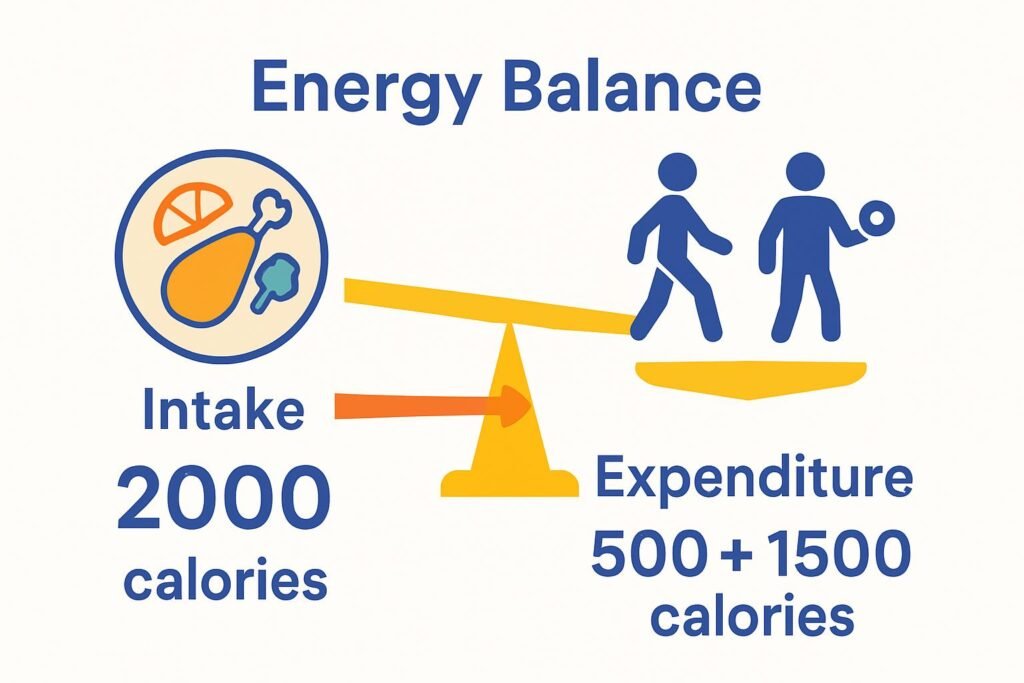
Let’s start with the basics. What does calorie deficit mean? It simply means eating fewer calories than your body burns in a day.
Your body needs a certain number of calories just to function. This includes breathing, digestion, thinking, and moving around. When you eat less than this number, your body uses stored fat for energy. Over time, this leads to weight loss.
In short: eat less than you burn, and your body starts using its fat stores. That is a calorie deficit.
How a Calorie Deficit Diet Works

A calorie deficit diet is not about starving yourself. It is about eating the right amount, not too much and not too little. Here is how it works, step by step:
- Your body burns a certain number of calories daily just to stay alive. This is called your maintenance level.
- When you eat below this number, your body needs extra energy.
- Your body pulls this energy from stored fat.
- Over days and weeks, this fat loss becomes visible on the scale and in the mirror.
This is why a calorie deficit is the foundation of almost every successful weight loss plan, no matter what diet trend you follow.
How Many Calories Should I Eat to Lose Weight?

This is the most common question we hear. And the honest answer is: it depends on you. Your calorie needs depend on your age, gender, weight, height, and how active you are.
That said, here is a simple way to understand it.
Step 1: Find Your Maintenance Calories
This is the number of calories your body needs to stay at its current weight. It is called your Total Daily Energy Expenditure, or TDEE.
A simple formula to estimate this:
- For women: Weight (kg) x 24 x activity factor
- For men: Weight (kg) x 26 x activity factor
Activity factor:
- Little to no exercise: 1.2
- Light exercise (1 to 3 days a week): 1.375
- Moderate exercise (3 to 5 days a week): 1.55
- Heavy exercise (6 to 7 days a week): 1.725
For example, a woman who weighs 65 kg and exercises lightly would need close to 65 x 24 x 1.375, which is about 2,145 calories a day to maintain her current weight.
Step 2: Create a Deficit
Once you know your maintenance number, subtract 300 to 500 calories from it. This gives you a safe, steady calorie deficit to lose weight without harming your health or slowing your metabolism.
So, in the example above, eating around 1,650 to 1,850 calories a day would create a healthy deficit for that woman.
How Many Calories a Day to Lose Weight: General Range
While everyone is different, here are general ranges many adults fall into:
| Group | Typical Daily Calorie Range for Weight Loss |
| Women (moderately active) | 1,400 to 1,800 calories |
| Men (moderately active) | 1,800 to 2,200 calories |
| Women (very active) | 1,800 to 2,200 calories |
| Men (very active) | 2,200 to 2,600 calories |
These are only starting points. Your exact number should be based on your body, health history, and goals, which is why working with a dietician gives far more accurate and safe results than guessing.
How Much of a Deficit Is Safe?
A small deficit gives slow but steady results. A very large deficit may feel tempting for faster results, but it usually backfires.
- A deficit of 300 to 500 calories a day helps you lose about half a kilo to one kilo a week. This is considered safe and sustainable.
- A deficit larger than 1,000 calories a day can lead to fatigue, hair fall, muscle loss, and a slower metabolism. It often causes the weight to return quickly once normal eating resumes.
Slow and steady truly wins here. Fast weight loss rarely lasts.
Sample Calorie Deficit Diet for Fat Loss

Here is a simple calorie deficit diet for fat loss, built around 1,600 calories. This is just an example. Your exact plan should match your own calorie needs.
| Meal | What to Eat | Approx. Calories |
| Breakfast | 2 vegetable-stuffed rotis with curd | 350 |
| Mid-Morning | 1 fruit (apple or papaya) | 80 |
| Lunch | 1 bowl dal, 1 vegetable, 1 roti, small salad | 400 |
| Evening Snack | Roasted chana or a handful of almonds | 150 |
| Dinner | Grilled paneer or chicken with sautéed vegetables | 350 |
| Before Bed | 1 glass warm milk (optional) | 100 |
Notice this plan is full of real food. There is no starving, no skipping meals, and no unrealistic restriction. This is what makes a calorie deficit diet work in real life.
Common Mistakes People Make With a Calorie Deficit
- Cutting calories too fast: This leads to fatigue and binge eating later.
- Ignoring protein: Low protein intake causes muscle loss, not just fat loss.
- Skipping meals: This often leads to overeating later in the day.
- Not tracking properly: Many underestimate how many calories they actually eat.
- Following the same plan forever: As you lose weight, your calorie needs change too.
Why a Personalized Approach Works Better
Calculators and general formulas give you a starting point. But real results come from a plan that fits your body, your medical history, and your daily routine. If your main goal is fat loss, a well-planned weight loss program looks at your calorie needs, food preferences, and lifestyle together, so the plan actually fits your life instead of the other way around.
Start Your Calorie Deficit the Right Way
A calorie deficit is simply eating a little less than your body burns. It is not about starving or giving up your favorite foods. With the right number of calories, the right foods, and consistency, weight loss becomes simple and steady.
If you want to know your exact calorie needs and a plan built just for your body, Dt. Richa Doshi and her team can help you get there safely. Contact us today to start your personalized journey.
FAQs
Q1. What is a calorie deficit in simple words?
A calorie deficit means eating fewer calories than your body burns in a day. This forces your body to use stored fat for energy, leading to weight loss over time.
Q2. What does calorie deficit mean for weight loss?
It means your body has to make up the missing energy from somewhere. Since you are not eating enough to meet your daily needs, your body taps into fat stores, which results in gradual weight loss.
Q3. How many calories should I eat in a day to lose weight?
This depends on your age, gender, weight, and activity level. Most adults lose weight safely eating between 1,400 and 2,200 calories a day, but your exact number should be personalized.
Q4. How many calories a day to lose weight fast?
Eating very low calories may cause faster initial weight loss, but it is not safe or sustainable. A steady deficit of 300 to 500 calories a day is a healthier and more lasting approach.
Q5. Can I follow a calorie deficit diet without counting every calorie?
Yes, many people follow a calorie deficit by eating balanced meals, controlling portion sizes, and avoiding processed foods, without tracking every single calorie.
Q6. Does a calorie deficit diet mean I have to stop eating carbs or fats?
No. A calorie deficit is about the total calories you eat, not cutting out entire food groups. Balanced meals with carbs, protein, and healthy fats work best for long-term results.