You go to the gym. You show up. You work hard. But the results just don’t seem to come.
Sound familiar?
Most of the time, the problem is not your workout. It’s your food. You might be eating too little. Or eating the wrong things at the wrong time. Or just not knowing what to eat at all.
That’s where a gym diet chart helps. It takes the guesswork out. You don’t have to think every day about what to eat. You just follow the plan.
This blog gives you a full 7-day Indian gym diet chart. It’s simple. It uses everyday Indian foods. And it works for both veg and non-veg people.
Let’s get into it.
Why Your Diet Matters as Much as Your Workout
Your muscles don’t grow in the gym. They grow when you rest and when you eat right.
When you lift weights or do cardio, your body breaks down muscle fibers. Food is what helps those fibers repair and grow back stronger.
Without the right food:
• You feel tired during workouts
• Your muscles take longer to recover
• You lose muscle instead of fat
• Results slow down or stop
With the right food:
• You have more energy to push harder
• Your muscles recover faster
• You lose fat and gain muscle at the same time
• You see results much sooner
So yes — what you eat is just as important as how hard you train.
What Should a Gym Diet Have?
Your gym diet needs three main things. These are called macronutrients. Let’s keep it simple.
1. Protein — The Builder
Protein builds and repairs your muscles. If you don’t eat enough protein, your muscles can’t grow.
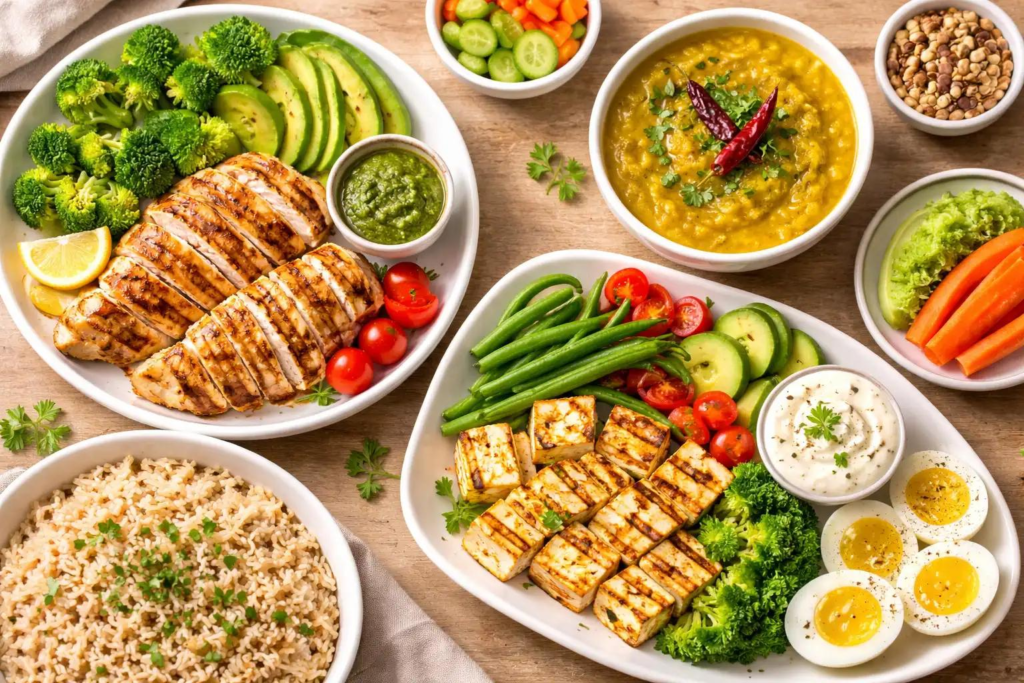
Good Indian protein sources: eggs, dal, paneer, chicken, fish, curd, tofu, sprouts, rajma, chole.
2. Carbs — The Fuel
Carbs give you energy. Don’t cut them out. Your body needs them to power through workouts.
Good Indian carb sources: rice, roti, oats, banana, sweet potato, bread, poha.
3. Fats — The Supporter
Healthy fats help your hormones work well. They also keep you full for longer.
Good Indian fat sources: almonds, walnuts, peanut butter, ghee (in small amounts), coconut.
Your Daily Macros at a Glance
Here’s a quick guide to how much of each nutrient you need per day:
| Nutrient | How Much (Per Day) | Best Indian Sources |
| Protein | 1.6–2.2g per kg body weight | Eggs, dal, paneer, chicken, tofu |
| Carbs | 4–6g per kg body weight | Rice, roti, oats, banana, sweet potato |
| Fats | 0.8–1g per kg body weight | Nuts, ghee (small), peanut butter |
| Water | 3–4 liters per day | Plain water, coconut water, buttermilk |
Note: These are general numbers. Your exact needs depend on your body weight, goal, and workout intensity. For a personalized plan, it’s best to consult a dietitian.
Meal Timing: When to Eat for Best Results
What you eat matters. But when you eat also matters a lot.
Early Morning (6–7 AM)
Start your day with warm water. Add soaked nuts. This wakes up your digestion and gives your body a slow dose of energy.
Pre-Workout (30–45 Mins Before Gym)
Eat something light with carbs and a little protein. This gives you fuel for your workout. Don’t eat heavy — you’ll feel sick.
Good options: banana + peanut butter, brown bread + egg, oats with milk.
Post-Workout (Within 30–60 Mins After Gym)
This is the most important meal of your day. Your muscles are hungry for protein right after a workout. Eat a proper meal with protein and carbs.
Good options: eggs + oats, paneer bhurji + roti, chicken + rice.
Lunch (1–2 PM)
Have a balanced meal with dal or sabzi, roti or rice, and a salad. Don’t skip this meal.
Evening Snack (4–5 PM)
A light snack helps you avoid overeating at dinner. Keep it protein-rich.
Good options: sprouts chaat, roasted chana, Greek yogurt, boiled sweet potato.
Dinner (7–8 PM)
Keep dinner light. Focus on protein and veggies. Avoid too many carbs late at night.
Post-Dinner (Optional, 9–10 PM)
Warm milk with haldi (turmeric) helps with muscle recovery while you sleep.
Your Full 7-Day Gym Diet Chart (Indian Meal Plan)
Here’s your complete weekly plan. It uses simple Indian ingredients. You can swap veg options for non-veg and vice versa based on your preference.
| Meal / Time | Monday | Tuesday | Wednesday | Thursday | Friday | Saturday | Sunday |
| Early Morning (6–7 AM) | Warm water + soaked almonds (5–6) | Warm water + soaked almonds (5–6) | Warm water + soaked walnuts (4–5) | Warm water + soaked almonds (5–6) | Warm water + banana | Warm water + soaked almonds (5–6) | Warm water + dates (2) |
| Pre-Workout (7–8 AM) | Banana + 1 boiled egg | 1 slice brown bread + peanut butter | Banana + peanut butter | Banana + 2 boiled eggs | 1 slice brown bread + egg | Banana + peanut butter | Oats with milk (small bowl) |
| Post-Workout (9–10 AM) | 3 egg whites + oats | Paneer bhurji + 2 rotis | 3 egg whites + brown rice | Paneer sandwich + buttermilk | Sprout salad + 2 eggs | Curd rice + boiled eggs (2) | Moong dal chilla (3) |
| Lunch (1–2 PM) | Dal + 2 rotis + salad + sabzi | Rajma + 2 rotis + salad | Chicken curry + 1 cup rice | Chole + 2 rotis + curd | Dal makhani + rice + salad | Fish curry + rice + salad | Mixed dal + 2 rotis + sabzi |
| Evening Snack (4–5 PM) | Sprouts chaat + chai | Roasted chana + buttermilk | Greek yogurt + fruits | Peanuts + black coffee | Boiled sweet potato + chai | Makhana (roasted) + chai | Sprouts + lemon water |
| Dinner (7–8 PM) | Grilled chicken/paneer + sabzi + roti | Moong dal + 1 roti + salad | Tofu stir fry + rice | Dahi + sabzi + 1 roti | Grilled paneer + soup + salad | Dal + 1 roti + sabzi | Egg curry + 1 roti + salad |
| Post-Dinner (9–10 PM) | Warm milk or haldi doodh | Warm milk | Warm milk | Warm milk or chamomile tea | Warm milk | Warm milk | Warm milk |
Tip: Drink at least 3–4 liters of water every day. Add coconut water or buttermilk on heavy workout days.
Veg vs Non-Veg: Easy Swaps
If you’re vegetarian, here are simple swaps for non-veg items in the chart:
| Non-Veg Option | Veg Swap |
| Boiled eggs | Paneer / tofu / sprouts |
| Chicken curry | Chole / rajma / soya chunks |
| Fish curry | Kadala curry / mixed dal |
| Egg whites | Moong dal / low-fat curd |
| Grilled chicken | Grilled paneer / tofu |
Foods to Avoid When You’re Going to the Gym
Some foods slow down your progress. Try to avoid these, especially on workout days:
• Fried foods — samosa, pakoda, chips
• Sugary drinks — cold drinks, packaged juices, energy drinks
• Maida-based foods — white bread, biscuits, naan
• Alcohol — slows muscle recovery badly
• Too much salt — causes water retention and bloating
• Skipping meals — your body will break down muscle for energy
You don’t need to eat perfect 100% of the time. But try to avoid these things most days.
5 Simple Tips to Make This Diet Plan Work
1. Don’t Skip Breakfast
Breakfast — especially your post-workout meal — is the most important. Don’t rush out on an empty stomach.
2. Cook in Bulk
Boil eggs, cook dal, or rice in advance. This saves time and helps you stay on track.
3. Always Carry a Snack
Keep roasted chana, nuts, or a banana with you. This stops you from grabbing junk food when you’re hungry.
4. Eat Slowly
Chew your food well. Eating fast leads to bloating and overeating.
5. Be Consistent
One good week won’t change your body. But 3–4 consistent weeks will. Stick with it.
A Note on Supplements
You don’t need supplements to see results. Real Indian food gives you almost everything you need.
But if you’re training hard and struggling to meet your protein goals from food alone, a basic whey protein supplement (1 scoop post-workout) can help. Always consult a dietitian before starting any supplement.
Don’t fall for fancy ads. Most people do just fine with proper home-cooked food.
Common Questions About Gym Diet (FAQs)
Q: How much protein do I need per day for gym?
For gym-goers, aim for 1.6 to 2.2 grams of protein per kilogram of your body weight. So if you weigh 70 kg, you need around 112–154g of protein per day.
Q: Can I follow this gym diet chart if I’m vegetarian?
Yes, absolutely. Use the veg swap table above. Indian vegetarian food has great protein options like paneer, tofu, dal, rajma, chole, and curd.
Q: Should I eat rice or roti at the gym?
Both are fine. Rice is easier to digest and is great post-workout. Roti gives you more fiber. You can include both in your week.
Q: What if I work out in the evening?
Just shift the timing. Your pre-workout meal would be your evening snack (4–5 PM) and your post-workout meal would be dinner. Keep it light and protein-rich.
Q: Can I eat this diet chart even if I’m a beginner at the gym?
Yes! This chart works for beginners. As your fitness improves, your calorie and protein needs may go up. That’s a good time to consult a dietitian for a more customized plan.
Q: Is this gym diet chart good for weight loss too?
Yes. This plan is built to help you lose fat while keeping your muscles. The key is to control portion sizes and avoid junk food on the side.
Final Thoughts

A gym diet chart doesn’t have to be complicated. You don’t need expensive protein shakes or exotic superfoods.
You just need the right Indian foods, eaten at the right times, every single day.
This 7-day meal plan is your starting point. Use it as a guide. Adjust it based on your food preferences and how your body responds. And remember — no plan works unless you follow it.
Start this week. Stay consistent. The results will come.
Want a personalized gym diet plan made just for you? Dt. Richa Doshi at The Health Studio offers online diet consultations across India and worldwide. Reach out today!